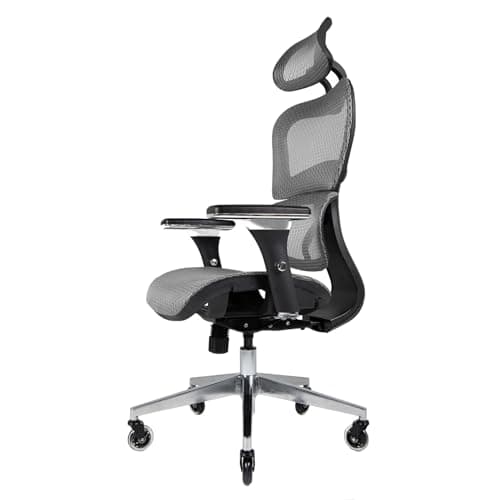
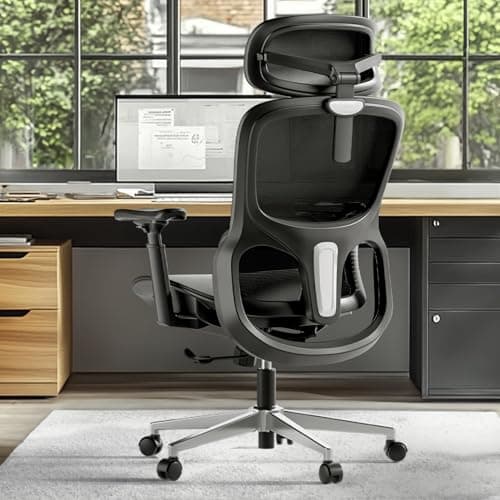
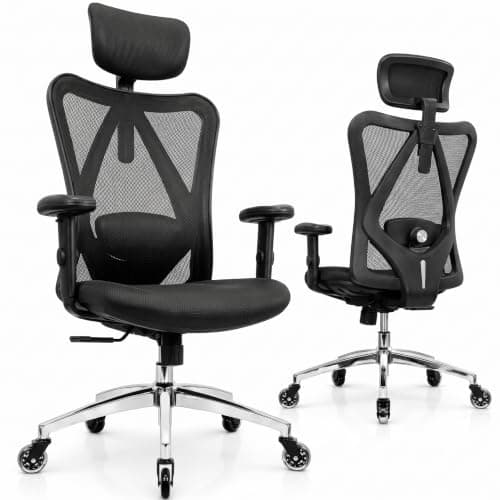
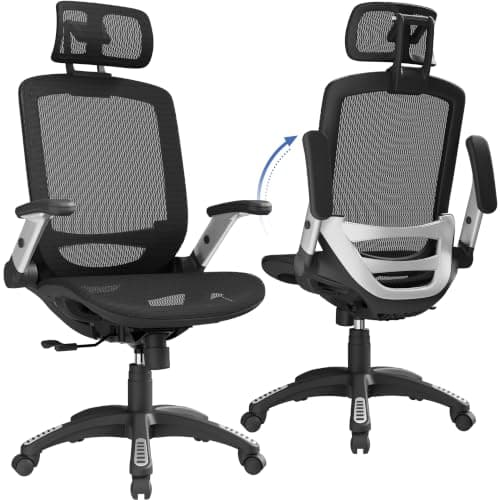
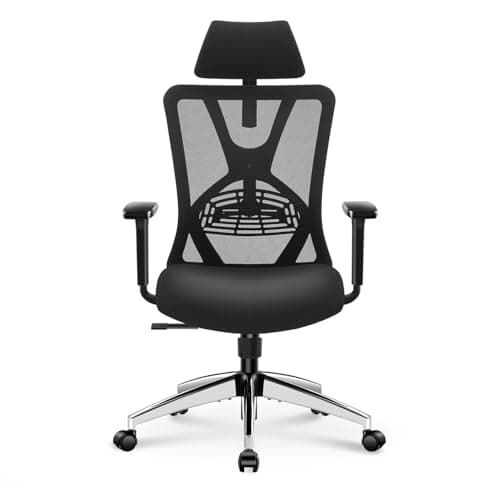
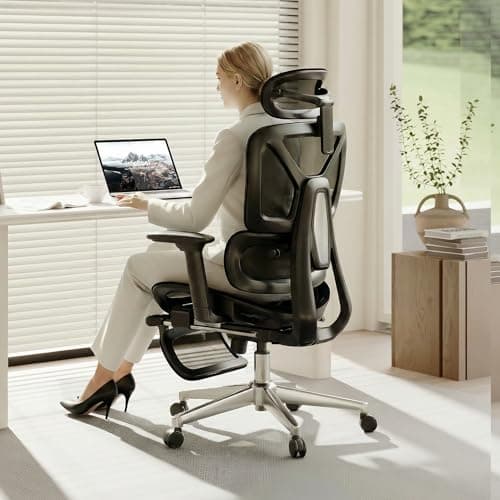
The closest alternative to a SIHOO is the FlexiSpot ErgoX: a dynamic lumbar, 3D armrests, a 3D headrest, an air-mesh back and a published 400 pound capacity, which is the only figure on this page that beats SIHOO’s own 330. If the lumbar is what you came for, the Hbada P2 publishes a 3D lumbar adjustable in height, depth and width — more axes than any SIHOO chair states — for noticeably less money. The budget pick is the Ticova, which keeps the two adjustments that matter most at this tier, a lumbar that moves in and out as well as up and down and an adjustable headrest, and spends nothing on anything else.
It is worth being precise about what SIHOO actually sells, because the brand did not win its place on every shortlist with build quality. Strip the Doro C300 Pro V2, the M57 and the M18 down to the specifications SIHOO publishes and you get five claims: an adjustable lumbar (self-adjusting on the flagship, height-and-depth on the M57), an adjustable headrest, multi-axis armrests (8D on the Doro, 3D on the M57), a 330 pound capacity, and an all-mesh back — a flagship feature list at a mid-market price. That is the list an alternative has to answer, and most of the field answers three or four of the five.
Which alternative publishes which claim
| Alternative | Lumbar | Armrests | Headrest | Capacity |
|---|
| FlexiSpot ErgoX | Dynamic, 5-level back | 3D | 3D headrest | 400 lb |
| Nouhaus Ergo3D | Adjustable | 4D | Not published | 300 lb |
| Hbada P2 | 3D — height, depth and width | 3D, 360-degree rotation | Not published | Not published |
| Duramont | Adjustable, one axis | Adjustable | Adjustable | Not published |
| Gabrylly | Not independently adjustable | Flip-up, fixed | 2D headrest | 280 lb |
| Ticova | Height and depth | Adjustable | Adjustable | Not published |
The capacity column is the one to read twice. Only the FlexiSpot ErgoX publishes a figure above SIHOO’s 330 pounds, the Nouhaus and the Gabrylly publish lower numbers, and three of the six publish nothing at all. We have written not published rather than filling the cell, because a capacity figure is a maker’s own statement about its gas lift, its base and its welds — and a chair that declines to make one is telling you something. Office chair weight capacity explains what the number covers and what it does not, and why a chair keeps sinking is what happens when the gas lift is the part that was underspecified.
The claim nobody on this page makes: a warranty term
SIHOO publishes no warranty term on these listings, and neither do five of the six alternatives. The exception is the Hbada P2 at three years, which is the longest stated cover anywhere in this price band. For comparison, the Steelcase Series 2 publishes 12 years on the mechanism and a 400 pound capacity — roughly double the money, and the reason the under-$1,000 roundup exists as a separate page. If a chair has to survive eight hours a day for a decade, the honest advice is to stop shopping this tier and read how long office chairs last first, because every pick on this page is a three-to-five-year chair being sold as a ten-year one.
What people are actually replacing when they search this
- The mesh seat. A suspended mesh seat is cool and unforgiving, and it is the most common complaint about mid-market mesh chairs. The Duramont is the answer here: a mesh back over a genuinely thick seat cushion, which is the combination that works if the pain is in the sit bones rather than the lower back. Office chairs for back pain sorts that distinction out properly.
- The armrests. “8D” and “3D” are marketing counts, not standards. The Nouhaus publishes 4D arms and the Hbada publishes arms that rotate a full 360 degrees; the Gabrylly, which is cheaper than both, has flip-up arms that do not adjust at all. That is the single clearest trade on this page.
- The fit. None of these chairs publishes a seat-depth adjustment, and the Hbada states a fit range of 5 foot 4 to 6 foot 2 rather than a frame size. If you are outside that, the chair sizing guide is the page to read before you order anything, and office chairs for tall people ranks the field that actually fits.
Where SIHOO is still the right buy
Two cases, said plainly. The first is the Doro C300’s self-adjusting lumbar: no chair on this page publishes a dynamic lumbar except the FlexiSpot ErgoX, and if you liked a support that tracks you rather than one you set once, the field is genuinely small. The second is the 330 pound capacity at the price: only the ErgoX beats it, and the three cheapest picks here publish no figure at all, so you would be trading a stated number for an unstated one. If what you want is the comparison rather than the replacement, SIHOO versus Herman Miller sets the brand against the other end of the market, and the ergonomic chairs roundup ranks the whole field with the SIHOO flagship inside it.
How to read a mid-market chair specification
The listings in this tier are written to look like flagship listings, and three habits will get you through them.
- Count the lumbar axes, not the adjectives. “Lumbar support” with no axis stated usually means a fixed curve moulded into the back. A lumbar that moves up and down lets you put it at your own curve; one that also moves in and out lets you set how hard it pushes. The Hbada publishes three axes and the Ticova and the SIHOO M57 publish two, which is the whole argument for those chairs.
- Treat armrest “D” numbers as a count of directions. 4D means up and down, forward and back, side to side, and pivot. There is no standard behind the number, so check the directions listed rather than the figure. Flip-up arms that do not adjust, as on the Gabrylly, are the cheapest version of this feature.
- Look for the capacity figure and the warranty term. Both are the maker’s own statements about parts that fail: the gas lift, the base, the welds and the mechanism. Three of the six chairs here publish neither. That is not automatically disqualifying at this price, but it should change what you expect in year four.
The two accessories that change a mid-market chair most
A chair in this tier is usually let down by its casters and its floor. Rollerblade-style casters stop the chair gouging a hard floor and cut the force needed to reposition — the Duramont and the Nouhaus both ship them, and they are a cheap retrofit for the others. On carpet, the opposite problem applies and the fix is a mat: the chair mats roundup ranks those by pile depth, and office chairs on hardwood floors covers the damage case. A footrest is the other one, and it matters most if the desk cannot go low enough — the footrests roundup has that field.
If the desk is the next thing
The same “what am I actually paying for” question applies one surface up. FlexiSpot alternatives works through the standing desk field on published frame figures, which is useful here because FlexiSpot makes both the chair ranked first on this page and the desks on that one. For the input half of the desk, Keychron alternatives does the same job for keyboards, and how to adjust an office chair is the free step most people skip after buying any of these.