If your room is the problem - hard walls, no curtains, a keyboard three inches away - the microphone to buy instead is the Shure MV7+: a dynamic capsule with a real-time denoiser running on the microphone itself, which is the only pick here that stops an ordinary room being audible. If your desk is the problem, the RODE NT-USB Mini does the Yeti’s core job in the footprint of a coffee cup with the pop filter already inside it. And the budget pick is the FIFINE K669B, which runs the same 16-bit / 48 kHz conversion as the Yeti in a metal body for a fraction of the money.
What the Blue Yeti is known for
Taken from its own published specification rather than from opinion, because that is the only fair way to compare against it:
- A tri-capsule array - three 14mm condensers rather than one.
- Four switchable polar patterns: cardioid, bidirectional, omnidirectional and stereo. This is the headline feature and the reason it has been the default recommendation for a decade - one microphone covers a solo call, a two-person interview across a desk, and a room recording.
- Physical controls: a gain dial and a mute button on the body, plus a zero-latency headphone output so you can hear yourself live.
- 16-bit / 48 kHz conversion, 20 Hz to 20 kHz, 120 dB maximum SPL.
And the three honest reasons people look past it, none of which make it a bad microphone: 16-bit conversion where everything newer here is 24-bit, a large body and stand that take real desk space, and the fact that a condenser capsule in omnidirectional or stereo mode hears your entire room - which is usually the wrong thing on a work desk.
Say this part out loud before you switch: nothing on this page reproduces the four polar patterns. Every alternative below is a single-pattern microphone. If you genuinely use bidirectional mode for interviews at one desk, the Yeti is still the only device here that does it, and the right move is to keep it.
Which alternative matches which reason
| If the problem is… | The pick | What changes |
|---|
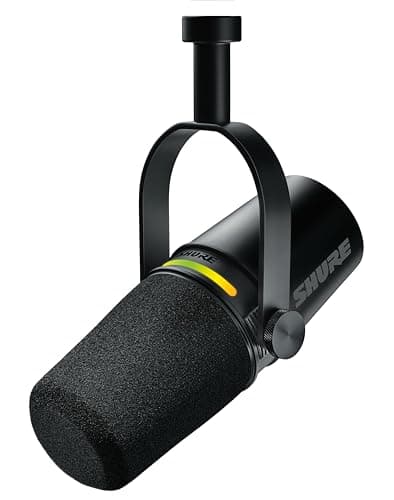
| Your room is audible | Shure MV7+ | Dynamic capsule plus an on-mic denoiser, and XLR as well as USB |
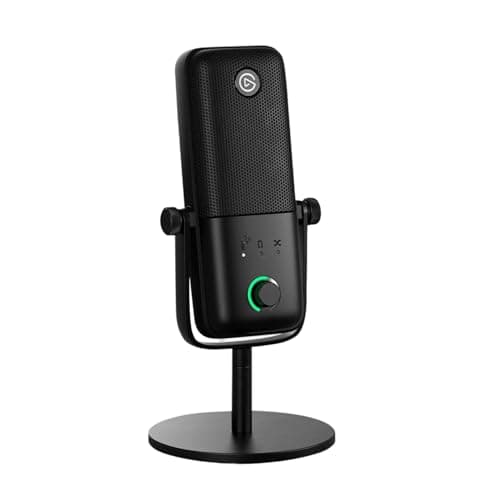
| You want better sound, same format | Elgato Wave:3 MK.2 | Supercardioid pickup, 24-bit, 110 dB dynamic range, Clipguard |
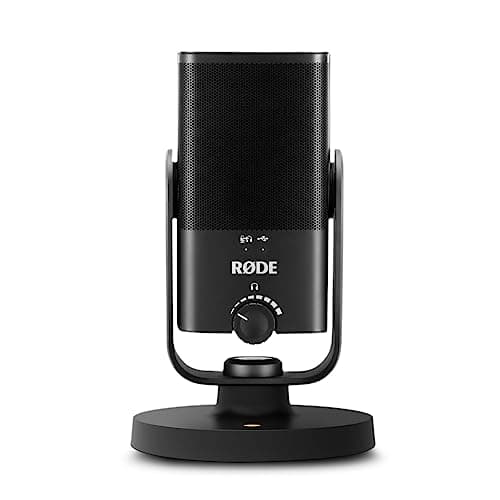
| The Yeti is too big | RODE NT-USB Mini | Coffee-cup footprint, built-in pop filter, magnetic base, 24-bit |
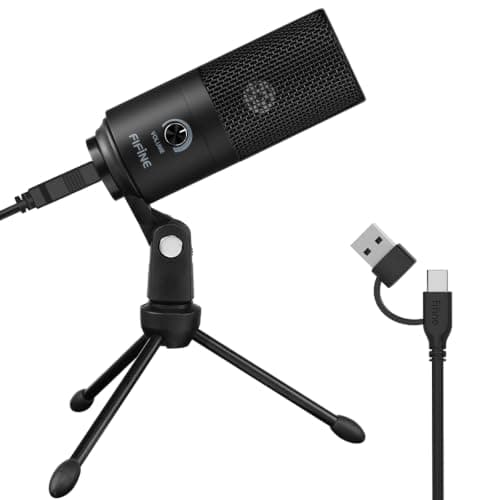
| It costs too much | FIFINE K669B | The same 16-bit / 48 kHz conversion, metal body, volume knob |
The specification that decides it: capsule type
Bit depth and frequency response get the attention. Capsule type decides how you sound in the room you actually have, and it is the one line on the specification sheet that reliably predicts whether you will be happy.
- A condenser - the Yeti, the Elgato, the RODE and the FIFINE - is sensitive and detailed. It picks up the voice beautifully and it picks up the room with it: the refrigerator, the keyboard, the echo off a bare wall. In a carpeted room with soft furnishings that sensitivity is a feature. In a hard-walled spare bedroom it is the reason people buy a second microphone.
- A dynamic - the Shure MV7+ - is deliberately less sensitive and much more directional at close range. It hears what is six inches in front of it and loses interest quickly after that. The trade is that you have to be close to it, which is why a dynamic on a desk stand two feet away sounds thin and the same microphone on a boom arm sounds professional.
So the first question is not budget. It is whether your room is treated. If it is not, a dynamic capsule fixes more than any amount of extra money spent on a better condenser will.
What each one publishes
| Microphone | Capsule | Pattern | Conversion | Headphone monitoring |
|---|
| Blue Yeti (the original) | Three 14mm condensers | Four switchable | 16-bit / 48 kHz | Yes, zero-latency |
| Shure MV7+ | Dynamic (moving coil) | Cardioid | 24-bit / 48 kHz | Yes, plus a level meter |
| Elgato Wave:3 MK.2 | 16mm condenser | Supercardioid | 24-bit / 48 kHz | Yes, 3.5mm jack |
| RODE NT-USB Mini | Electret condenser | Cardioid | 24-bit / 48 kHz | Yes, zero-latency |
| FIFINE K669B | 16mm condenser | Cardioid | 16-bit / 48 kHz | No |
Two readings worth spelling out. First, three of the four alternatives move you from 16-bit to 24-bit conversion, which gives more headroom before clipping rather than a different tone - useful, not transformative. Second, the FIFINE is the only pick with no headphone output at all, which means you cannot hear yourself live. For calls that is survivable. For anything you record, it means mistakes stay invisible until playback.
The short answer
Quick picks
| # | Product | Best for | Score | Price |
|---|
| 01 | Shure MV7+ USB-C and XLR Podcast Dynamic MicrophoneThe alternative that fixes the thing the Yeti cannot. A dynamic capsule hears you and not your house, the denoiser runs on the microphone rather than in call software, and the XLR output means it survives an upgrade to an audio interface. | An untreated room - the biggest upgrade here | | $255.00·Amazon |
| 02 | Elgato Wave:3 MK.2 USB Condenser MicrophoneThe same-format upgrade. Still a condenser, but a supercardioid pattern that is tighter than the Yeti's cardioid, 24-bit conversion, and a backup signal that saves a take when you suddenly get loud. | Better sound without changing format | | $133.99·Amazon |
| 03 | RODE NT-USB Mini Condenser USB MicrophoneThe answer if the Yeti is simply too big. A built-in pop filter, a magnetic desk base and zero-latency monitoring in a footprint the size of a coffee cup - plug it in and sound better. | A crowded desk - smallest footprint here | | $105.00·Amazon |
| 04 | FIFINE K669B USB Condenser MicrophoneThe budget pick: the same 16-bit / 48 kHz conversion as the Yeti, in a metal-bodied cardioid condenser with a volume knob, for a fraction of the money. The honest cheap swap. | Budget pick - same conversion, far less money | | $36.99·Amazon |
#ad · Live prices from the Amazon Product API, as of November 12, 2026. Where we have no verified live price we show none — we would rather leave a gap than print a number that has rotted.
In detail
The picks, in full
An untreated room - the biggest upgrade here
Shure MV7+ USB-C and XLR Podcast Dynamic Microphone
- Capsule
- Dynamic (moving coil)
- Polar pattern
- Unidirectional cardioid
- Connections
- USB-C and XLR, both usable
- Conversion
- 24-bit / 48 kHz
- Frequency response
- 50 Hz to 16 kHz
- Max SPL
- 128 dB
- Onboard DSP
- Real-time denoiser, digital popper stopper, reverb, EQ and compression via MOTIV Mix
- Controls
- Multicolor LED touch panel, headphone output
The alternative that fixes the thing the Yeti cannot. A dynamic capsule hears you and not your house, the denoiser runs on the microphone rather than in call software, and the XLR output means it survives an upgrade to an audio interface.
- Room Rejection
- 9.6
- Voice Quality
- 9.2
- Features
- 9.4
- Value
- 6.8
Pros
- +A dynamic capsule plus voice isolation means an ordinary room stops being audible
- +The denoiser runs on the microphone rather than in call software, so it works in every app
- +XLR as well as USB - it stays useful if you later add an audio interface
- +The touch panel doubles as a level meter, so you see clipping before anyone hears it
Cons
- −The most expensive microphone here by a wide margin
- −Dynamic capsules need you within about six inches, so a desk stand two feet away sounds thin
- −One pattern only - no bidirectional mode for a two-person interview
Skip this if…
…you sit far back from the desk - a dynamic mic rewards proximity and punishes distance.
Better sound without changing format
Elgato Wave:3 MK.2 USB Condenser Microphone
- Capsule
- 16 mm condenser
- Polar pattern
- Supercardioid
- Conversion
- 24-bit / 48 kHz
- Frequency response
- 70 Hz to 20 kHz
- Max SPL
- 130 dBSPL typical at 1 kHz
- Dynamic range
- 110 dB
- Connections
- USB-C, plus a 3.5mm headphone jack
- Protection
- Clipguard 2.0 lower-level backup signal
The same-format upgrade. Still a condenser, but a supercardioid pattern that is tighter than the Yeti's cardioid, 24-bit conversion, and a backup signal that saves a take when you suddenly get loud.
- Room Rejection
- 8.2
- Voice Quality
- 9
- Features
- 9
- Value
- 8.2
Pros
- +Supercardioid is a narrower pickup than the Yeti's cardioid, which helps in a live room
- +Clipguard records a second, lower-level signal so a sudden loud moment does not destroy the take
- +110 dB of dynamic range is genuinely wide for a USB condenser
- +Desk stand in the box, and it comes off cleanly for a boom arm
Cons
- −It is still a condenser - a noisy or echoey room will be audible
- −One pattern, where the Yeti has four
- −Software-centric: the good features assume you run Elgato's mixer
Skip this if…
…your room is hard-walled and untreated - a dynamic mic will sound better with no effort.
A crowded desk - smallest footprint here
RODE NT-USB Mini Condenser USB Microphone
- Capsule
- Professional-grade electret condenser
- Polar pattern
- Cardioid
- Conversion
- 24-bit / 48 kHz
- Frequency range
- 20 Hz to 20 kHz
- Max SPL
- 121 dB at 1% THD
- Connections
- USB-C output, 3.5mm headphone output with zero-latency monitoring
- Stand
- Magnetic desktop base with 360 degree swivel; built-in pop filter
The answer if the Yeti is simply too big. A built-in pop filter, a magnetic desk base and zero-latency monitoring in a footprint the size of a coffee cup - plug it in and sound better.
- Room Rejection
- 7.8
- Voice Quality
- 8.8
- Features
- 8
- Value
- 8.8
Pros
- +A fraction of the Yeti's desk footprint, which is the most common complaint about it
- +Built-in pop filter means no separate screen cluttering the desk
- +Magnetic base detaches instantly for a boom arm and reattaches without tools
- +Zero-latency headphone monitoring, matching the Yeti, at 24-bit rather than 16-bit
Cons
- −Cardioid only - no pattern switching for interviews or instruments
- −Condenser capsule, so the room caveat applies as much as it does to the Yeti
- −No onboard DSP or noise processing
Skip this if…
…you need multiple pickup patterns - this is deliberately a one-job microphone.
Budget pick - same conversion, far less money
FIFINE K669B USB Condenser Microphone
- Capsule
- 16mm cardioid condenser
- Conversion
- 16-bit / 48 kHz
- Frequency range
- 80 Hz to 20 kHz
- Sensitivity
- -43 +/- 3 dB
- Body
- Solid metal with a tripod stand
- Controls
- Volume knob on the body
The budget pick: the same 16-bit / 48 kHz conversion as the Yeti, in a metal-bodied cardioid condenser with a volume knob, for a fraction of the money. The honest cheap swap.
- Room Rejection
- 7
- Voice Quality
- 7.2
- Features
- 6.4
- Value
- 9.8
Pros
- +Matches the Yeti's 16-bit / 48 kHz conversion rather than falling below it
- +Enormously better than any laptop microphone, for a trivial amount of money
- +Metal body resists handling noise better than the plastic mics at this price
- +Cardioid pattern rejects what is behind it, which is most of the benefit
Cons
- −No headphone monitoring jack, so you cannot hear yourself live - the Yeti can
- −An 80 Hz low end rather than the Yeti's 20 Hz, so voices lose some weight
- −Included tripod is short, so it sits low and picks up desk noise
Skip this if…
…you record rather than call - the lack of monitoring makes mistakes invisible until playback.
Fix the room and the position before you fix the microphone
A large share of people who replace a Yeti did not have a microphone problem. Two changes cost nothing and routinely do more than a new device:
- Get closer. Every microphone here sounds better at six to eight inches than at two feet, and the effect is dramatic rather than subtle. A microphone sitting behind your keyboard is roughly three times further away than it should be, which is why it is picking up so much room.
- Point it at your mouth, not at the ceiling. The Yeti is a side-address microphone: you speak into the side with the logo, not the top. A surprising number of people talk over the top of one for years. If that is the problem, nothing on this page is the fix.
After that, the room itself. Soft furnishings, a rug, a curtain or even a bookcase on the reflective wall will quieten an echo more than a capsule upgrade will. A dynamic microphone is the hardware shortcut when you cannot change the room - which is exactly when the MV7+ earns its price.
If it is only for calls, a microphone may be the wrong purchase
Worth saying plainly on a page about buying one. If the entire use case is Teams, Zoom and Meet, a headset with a boom microphone beats any desk microphone on the one thing that matters on a call - it is always the same distance from your mouth, and it solves the other half of the problem by putting the far end in your ears rather than on your desk speakers. The best headsets for work calls ranks those, and the video call setup guide puts microphone, camera and lighting in the order that actually improves how you come across.
A desk microphone earns its place when you are recording, streaming, on camera, or simply would rather not wear anything on your head for six hours.
Two things to budget for alongside
A boom arm is the accessory that makes any of these sound like the reviews - it gets the microphone off the desk, so keyboard and mouse noise stop travelling up the stand, and it lets you put the capsule where your mouth is rather than where there is room. Both the RODE and the Elgato detach from their desk bases for exactly this.
A pop filter, unless the microphone has one built in. The RODE above does; the others do not. It is the cheapest thing on this page and it removes the plosive thump on every hard P and B.
Where the Yeti is still the right answer
If you use more than one polar pattern, keep it - nothing here switches patterns and that is the Yeti’s whole point. If you interview someone across a desk, bidirectional mode is a genuine capability the alternatives do not have. And if the microphone sits in a quiet, carpeted room and you are happy with how it sounds, 16-bit versus 24-bit is not a reason to spend money. The full field, with the Yeti ranked against these four on their own terms, is in the best USB microphones roundup.
How we picked
We do not run a testing lab
We compiled the published manufacturer specifications, did the ergonomics, VESA and desk-depth math ourselves, and read aggregated owner reviews, then scored each product against a published rubric. The scores are judgments from documented research — they are not measurements we took, because we do not have a lab and we are not going to pretend we do. Every spec traces back to a listing or manual named in Sources.
Questions
Frequently asked
What is the best alternative to the Blue Yeti?+
It depends which Yeti problem you have. For an untreated room, the Shure MV7+, because a dynamic capsule plus its on-mic denoiser is the only thing here that stops the room being audible. For a smaller desk, the RODE NT-USB Mini. For a cheaper swap with the same 16-bit / 48 kHz conversion, the FIFINE K669B. None of them switch polar patterns, which is the one thing the Yeti does that they do not.
Is there a cheaper microphone that sounds as good as a Blue Yeti?+
The FIFINE K669B runs the same 16-bit / 48 kHz conversion and a cardioid condenser capsule in a metal body, for a fraction of the price - so for a straightforward solo call or recording it closes most of the gap. What you lose is the headphone output, the deeper 20 Hz low end and the four polar patterns.
Why does my Blue Yeti pick up so much background noise?+
Three usual causes, in order. It is set to omnidirectional or stereo rather than cardioid - those modes are designed to hear the whole room. You are speaking over the top instead of into the side, because it is a side-address microphone. Or you are too far from it, so the gain is turned up and the room comes up with your voice. If none of those apply, the room itself is the problem and a dynamic microphone is the hardware fix.
Should I get a dynamic or a condenser microphone for a home office?+
Condenser if your room is carpeted, curtained or otherwise soft - you get more detail and the sensitivity is a feature. Dynamic if the room is hard-walled and untreated, because a dynamic capsule hears what is right in front of it and loses interest quickly after that. The trade is proximity: a dynamic needs you within about six inches to sound its best.
Receipts
Sources
We do not run a testing lab, and we do not pretend to. Specifications come from the manufacturer or retailer listing; the footprint and clearance math is ours and reproducible. Where we could not verify a number, we say so on the page rather than quietly leaving it out. Read our full method.