The problem with standing at a desk is not standing. It is standing still. When you walk, the muscles in your calves and feet contract rhythmically and help push blood back up your legs; when you stand motionless on a hard floor, that pump stops working, blood pools, and your legs and lower back start complaining within about half an hour. That is why people who buy a standing desk often conclude that standing is uncomfortable, and go back to sitting.
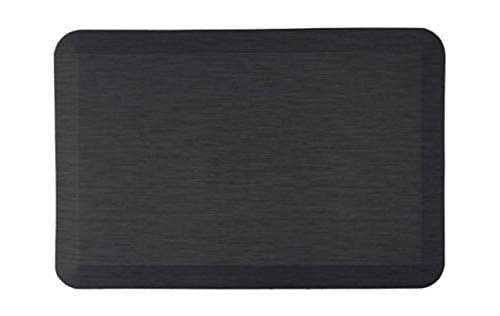
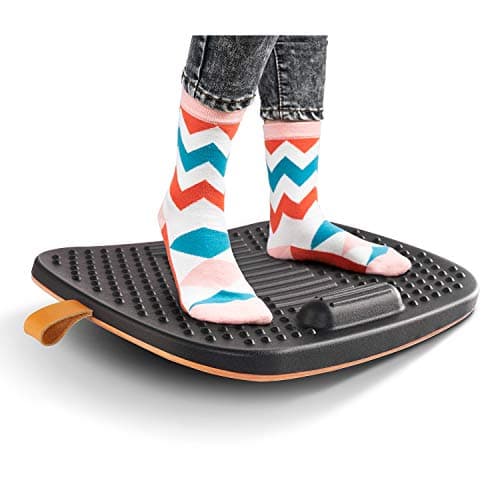
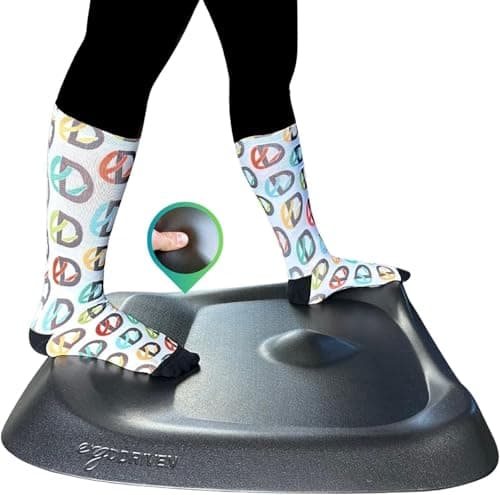
An anti-fatigue mat addresses it in one of two ways, and understanding which matters more than any specification. A flat cushioned mat works passively: the soft surface deforms slightly under your weight, which means your feet and ankles make constant tiny corrective adjustments without you noticing. Those micro-movements are what keeps the muscle pump working. A contoured or active matworks deliberately: it adds shaped features — mounds, edges, a raised bar — that invite you to change position, stretch a calf, or shift your weight, which produces bigger movements rather than smaller ones.
Which suits you depends on how long you stand and what kind of person you are. If you stand in short intervals and want to forget the mat is there, the flat cushioned type is the right buy. If you stand for long stretches and would actually use the prompts, an active mat keeps you moving in a way a flat one does not.
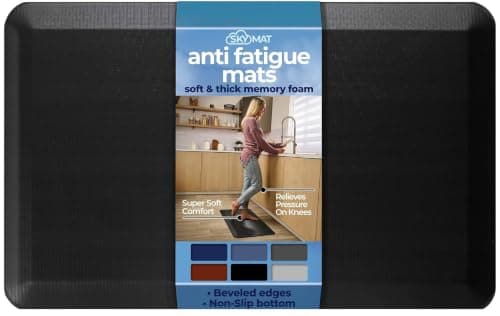
Two specifications actually matter. Thickness around three-quarters of an inch is the sweet spot: thinner mats do not deform enough to help, and much thicker ones become unstable in a way that makes standing more tiring rather than less. And the edgemust be beveled — a mat with a square edge is a trip hazard you will find with your toe several times a week, and it is also the first thing to curl.
A mat is also half of a pair. The other half is a way to rest without lowering the whole desk, which is what a tall chair or leaning stool provides. Buy both and the sit-stand cycle finally works the way the desk promised. Rankings follow how we pick.
A mat is one of four parts that decide whether a sit-stand desk keeps getting raised at all. The other three are in the standing desk accessories roundup.
How to choose an anti-fatigue mat
Pick the type by how you stand, not by price. If you stand in short bursts and want to step on and forget, a flat cushioned mat is right and the extra features of an active mat will only annoy you. If you stand for long stretches and know that you go rigid when concentrating, an active or contoured mat earns its money by breaking that up. A balance board is the most extreme version of the same idea, and it is genuinely distracting for precise work — know which of those you are before you buy.
Then check thickness and edges, which are the two specifications that separate a mat that works from one that does not. Around three-quarters of an inch is the target. Thinner mats do not deform enough to produce the micro adjustments that make the difference; much thicker ones become unstable, which makes standing more tiring rather than less. Beveled edges are not cosmetic — a square-edged mat is a trip hazard, and its corners curl first.
Size it to your standing position, and measure. Most people underestimate: you want room to shift your feet, turn slightly, and take a half step in either direction without finding the edge. A mat that is only as wide as your shoulders keeps you rooted in one spot, which is the problem you were trying to solve.
Finally, treat the mat as one part of the standing setup rather than the whole of it. A mat helps a well-set-up desk and cannot rescue a badly set-up one — if the desk height is wrong for standing, or the monitor is too low when raised, fix that first with our height guide. Then add the mat for the standing intervals and a tall chair for the resting ones, and the whole cycle becomes something you keep doing rather than abandon in week three. Our budget standing desk roundup covers the desk side of the same argument.