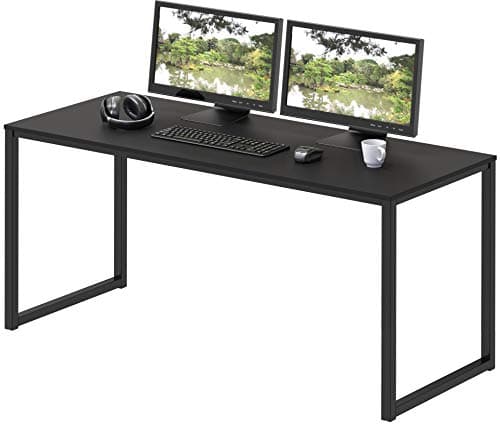
A desk is the one part of a setup you cannot upgrade with a firmware update, so it is worth getting the dimensions right the first time. For a laptop parked next to a single monitor, roughly 40 inches of width is the floor and about 48 inches is comfortable. Depth matters just as much: if the monitor sits on the surface rather than on an arm, you want close to 24 inches so the panel lands about an arm’s length away instead of pressing against your face.
Start with the footprint, because it sets everything else
Measure the wall or nook the desk will live in, then subtract a few inches of breathing room on each side. A 48-inch top gives a 15-inch laptop and a 27-inch monitor room to coexist with a notepad in the gap; anything under 40 inches forces you to stack windows on one screen instead of spreading gear across the desk. Depth is the quieter number and the one buyers skip. A monitor on its bundled stand eats 8 to 10 inches of depth before your keyboard even lands, so a 24-inch top keeps the screen at a sane viewing distance. Push that monitor onto a monitor arm and you claw the depth back for good, which is why a shallow desk and an arm often beat a deep desk and the stock stand.
Frame first, laminate second
The other decision is what holds the top up. Almost every desk in this bracket uses a particleboard or MDF top — that is normal, and it is what keeps the price sane — so the real quality signal is the frame underneath. A powder-coated steel A-frame or C-leg resists the side-to-side sway that makes typing feel like writing on a trampoline; thin folding legs and all-particleboard construction do not. Feel for frame rigidity first and judge the surface finish second. If you think you will ever want to stand, read the best standing desks roundup and the standing desk vs sitting desk comparison before you commit, because retrofitting a fixed slab into a sit-stand desk is not a thing you can do later.
How this list is ranked
Everything below is ordered the way we order everything on this site: from published specifications, manufacturer manuals, and the desk-depth math above — not from a lab we do not have. The how we pick page spells out that method in full. Once the surface is sorted, the chair you park under it decides whether the whole setup feels finished, so the best ergonomic office chairs guide is the logical next stop.
The short answer
Quick picks
| # | Product | Best for | Score | Price |
|---|
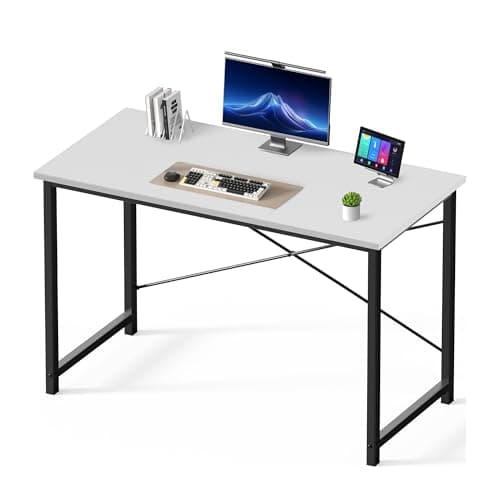
| 01 | SHW Mission 48" Home Office Computer DeskA plain, sturdy 48-inch fixed desk on a steel frame - the right size for a laptop and a single monitor with nothing wasted. It is the sensible default when you do not need the surface to move. | Best overall value | | $89.97·Amazon |
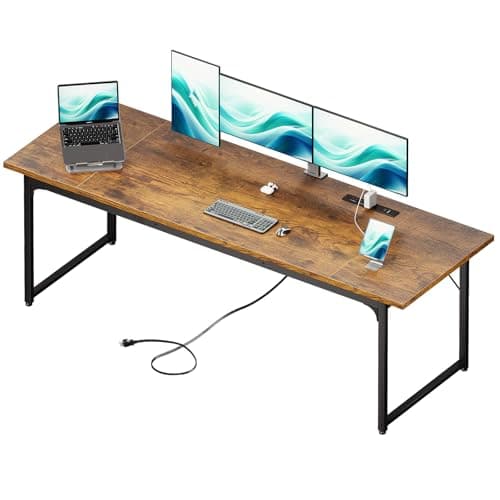
| 02 | Coleshome 79" Large Computer DeskA 79-inch slab built for people who run two monitors and still want elbow room. If your bottleneck is surface area rather than height, this is the cheap way to buy a lot of it. | Best big surface for dual monitors | | $129.98·Amazon |
| 03 | DUMOS 47" Computer Desk for Home OfficeA compact 47-inch desk aimed squarely at a tight budget and a tight room. It clears the bar for a laptop-plus-monitor setup without asking much of your wallet or your floor plan. | Best compact budget pick | | $35.88·Amazon |
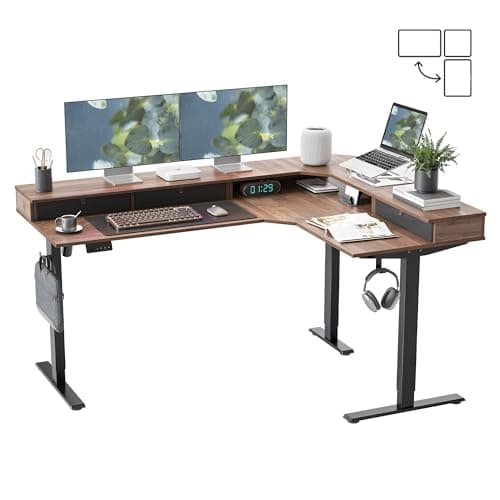
| 04 | | Best L-shaped corner (and it stands) | | $249.98·Amazon |
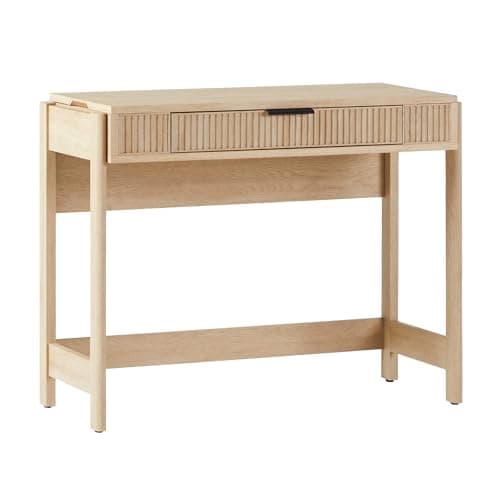
| 05 | Walker Edison Reeded Wood Computer DeskThe one you buy because it looks like furniture rather than office gear. The fluted, reeded front reads warm in a living room; just know you are trading some working width for the styling. | Best looks and design | | $193.49·Amazon |
#ad · Live prices from the Amazon Product API, as of Jul 24, 2026. Where we have no verified live price we show none — we would rather leave a gap than print a number that has rotted.
In detail
The picks, in full
Best overall value
SHW Mission 48" Home Office Computer Desk
- Surface
- 48" W x 24" D (approx.)
- Height
- 29" fixed
- Top
- MDF with laminate finish
- Frame
- Powder-coated steel A-frame
- Assembly
- Bolt-together, no electronics
A plain, sturdy 48-inch fixed desk on a steel frame - the right size for a laptop and a single monitor with nothing wasted. It is the sensible default when you do not need the surface to move.
- Stability
- 9
- Build
- 8
- Value
- 9
- Ease of Setup
- 8
Pros
- +The 48-inch width fits a laptop and a monitor side by side with a notepad in the gap
- +Steel A-frame keeps typing wobble low for a fixed desk
- +No motor or electronics to fail down the road
- +The 24-inch depth tucks into smaller rooms and corners
Cons
- −Height is fixed at a standard 29 inches with no sit/stand option
- −The laminate top will scuff if you drag gear across it
Skip this if…
…you want to alternate between sitting and standing during the day.
Best big surface for dual monitors
Coleshome 79" Large Computer Desk
- Surface
- 79" W x 30" D (approx.)
- Height
- Fixed, standard desk height
- Top
- Engineered wood, water-resistant laminate
- Frame
- Steel legs with leveling feet
- Assembly
- Two-person job for the long panel
A 79-inch slab built for people who run two monitors and still want elbow room. If your bottleneck is surface area rather than height, this is the cheap way to buy a lot of it.
- Stability
- 8
- Build
- 8
- Value
- 8
- Ease of Setup
- 8
Pros
- +Nearly seven feet of width swallows two monitors plus a keyboard tray of gear
- +The 30-inch depth leaves room for monitors on stands and a keyboard in front
- +Leveling feet help it sit flat on uneven floors
- +Low cost per square inch of desk
Cons
- −It needs a genuinely large wall - measure before you commit
- −A single long top flexes more in the middle than a shorter one
Skip this if…
…your room cannot spare a wall close to seven feet wide.
Best compact budget pick
DUMOS 47" Computer Desk for Home Office
- Surface
- 47" W x 24" D (approx.)
- Height
- 29" fixed
- Top
- Particleboard with laminate
- Frame
- Steel tube legs
- Extras
- Often ships with a small hook or holder
A compact 47-inch desk aimed squarely at a tight budget and a tight room. It clears the bar for a laptop-plus-monitor setup without asking much of your wallet or your floor plan.
- Stability
- 7
- Build
- 7
- Value
- 9
- Ease of Setup
- 7
Pros
- +Just wide enough for a laptop and a monitor at the lowest sensible price
- +The 24-inch depth fits bedrooms and dorm corners
- +Light enough for one person to build and move
- +Simple frame with little to go wrong
Cons
- −Thinner particleboard flexes more than a heavier top
- −No room to grow if you add a second monitor later
Skip this if…
…you already know a second monitor is coming.
Best L-shaped corner (and it stands)
FEZIBO L-Shaped Electric Standing Desk (63×48")
- Surface
- 63" x 48" L-shape (corner)
- Height range
- Electric, about 28 to 48 in
- Motor
- Electric lift with memory presets
- Top
- Engineered wood, two-piece corner
- Capacity
- Rated for a multi-monitor load
A corner desk that also rises electrically - the outlier here, and the pick if you want to fill an L-shaped nook and keep the option to stand. You pay for the motor and the extra top.
- Stability
- 7
- Build
- 8
- Value
- 7
- Ease of Setup
- 6
Pros
- +Wraps a corner and gives two working zones on one desk
- +Electric height change means it doubles as a standing desk
- +Memory presets recall your sitting and standing heights
- +A lot of usable surface for the footprint of one corner
Cons
- −Heavier and slower to assemble than any fixed desk here
- −An L-shaped top can sway more at full standing height than a straight one
- −Costs more than the fixed desks by a wide margin
Skip this if…
…you do not have a corner to build it into.
Best looks and design
Walker Edison Reeded Wood Computer Desk
- Surface
- Writing-desk width, shallow depth
- Height
- Fixed
- Top
- MDF with a reeded wood-look front
- Storage
- Single drawer
- Style
- Fluted / reeded front panel
The one you buy because it looks like furniture rather than office gear. The fluted, reeded front reads warm in a living room; just know you are trading some working width for the styling.
- Stability
- 6
- Build
- 7
- Value
- 7
- Ease of Setup
- 6
Pros
- +Fluted front and warm finish suit a bedroom or living space
- +A drawer hides small clutter without a separate cabinet
- +Reads as furniture, not a workstation
Cons
- −Shallow depth is tight once a monitor sits on the surface
- −A styling-first desk is less rigid than a plain steel-frame slab
Skip this if…
…you need a deep, wide surface more than a good-looking one.
How to choose a home office desk
Work outward from the space, then the frame, then the top. Measure the available width and leave a hand’s width of clearance on each side; a desk crammed wall-to-wall is a desk you resent every time you plug something in. As a rule of thumb, aim for at least 40 inches of width for a laptop-plus-monitor layout and 48 or more if you want a notepad, a mug, and a mouse pad to coexist. For a dual-monitor plan, jump to a 60-inch-plus top so the second screen is not hanging off the edge.
Depth is the spec buyers underrate. A 24-inch depth is the practical minimum once a monitor sits on the surface, because the stand alone claims most of the first foot. If you can only fit a shallow desk, budget for a monitor arm at the same time so the screen floats off the back edge and gives your keyboard room.
Then judge the frame. Steel legs with a crossbar or a wide A-frame stay steady; folding or all-particleboard legs let the whole desk shimmy when you type hard. The top itself is almost always particleboard or MDF at this price, and that is fine — a thicker top with a sealed laminate edge resists chipping and moisture better than a thin one. Finally, be honest about whether you will actually use height changes. If the answer is yes, a fixed desk is the wrong buy; send yourself to the standing desks list instead. And once the surface is picked, plan the cables that hang behind it with our under-desk cable management guide.
How we picked
We do not run a testing lab
We compiled the published manufacturer specifications, did the ergonomics, VESA and desk-depth math ourselves, and read aggregated owner reviews, then scored each product against a published rubric. The scores are judgments from documented research — they are not measurements we took, because we do not have a lab and we are not going to pretend we do. Every spec traces back to a listing or manual named in Sources.
Questions
Frequently asked
How wide should a home office desk be for a laptop and a monitor?+
About 40 inches is the workable floor and 48 inches is comfortable. That leaves a 15-inch laptop and a 27-inch monitor room to sit side by side with space between them for a notepad or a mouse pad. For two monitors, step up to 60 inches or more.
Is a 24-inch deep desk deep enough?+
Yes, if you plan for it. A monitor on its bundled stand uses 8 to 10 inches of depth, so a 24-inch top keeps the screen roughly an arm’s length away — the ergonomic target. Moving the monitor onto a
monitor arm reclaims that depth for your keyboard and hands.
Are particleboard or MDF desk tops any good?+
They are the norm in this price range and perfectly serviceable. A thicker top with a sealed laminate edge holds up to daily use and the odd spill. The bigger quality difference is the frame: a rigid steel frame under an average top beats a wobbly frame under a nicer one.
Do I need a standing desk instead?+
Only if you will actually change heights. A fixed desk is cheaper, steadier, and has nothing to break. If you want the option to alternate, read the
standing desk vs sitting desk comparison first so you buy the right category rather than regretting a fixed slab.
How much weight can these desks hold?+
Fixed steel-framed desks in this class comfortably carry a monitor or two, a laptop, and peripherals. The limiting factor is rarely the rated load and more often how the weight is distributed — keep the heaviest gear over the legs, not floating in the middle of a long, unsupported span.
Receipts
Sources
We do not run a testing lab, and we do not pretend to. Specifications come from the manufacturer or retailer listing; the footprint and clearance math is ours and reproducible. Where we could not verify a number, we say so on the page rather than quietly leaving it out. Read our full method.