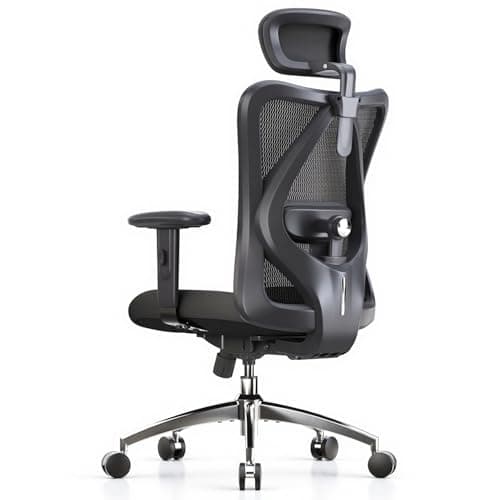
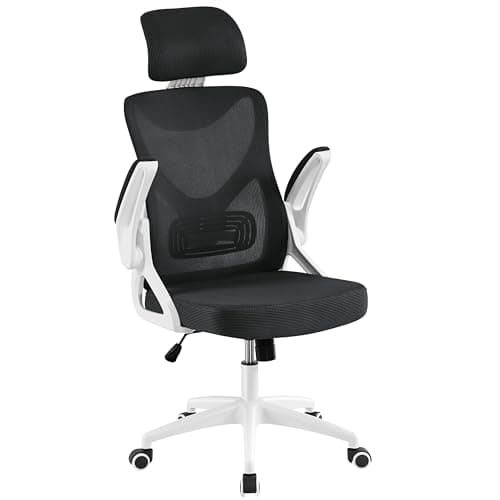
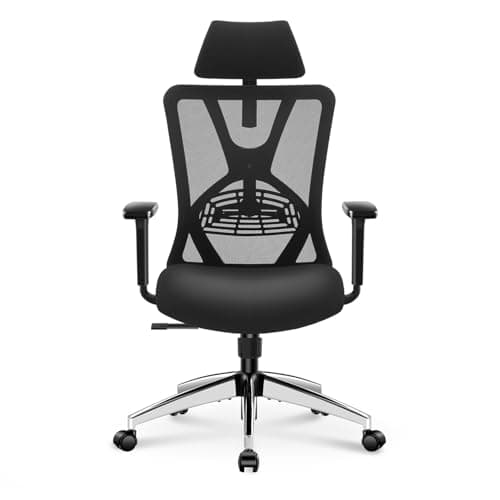
A cheap chair is not automatically a bad chair. It is a chair where somebody made a list of things to leave out, and whether it is a good buy depends entirely on what was on that list. Leave out the aluminum base, the twelve-year warranty, the branded mesh, and the adjustable seat depth, and you can still build something that supports a person properly. Leave out lumbar adjustment, height range, or usable armrests, and no amount of padding rescues it.
So this is not a roundup of the cheapest chairs. It is a roundup of the chairs that kept the right three things. Those three, in order of how much they affect your body: seat height, because a seat that cannot reach the height where your feet sit flat and your thighs stay level makes everything else irrelevant; lumbar support that meets the inward curve of your lower back rather than a flat panel behind it; and armrests that let your forearms rest so your shoulders stop holding your arms up all day.
What you genuinely do give up at this price is worth stating plainly. The materials are the first casualty — foam that compresses within a year or two rather than five, plastic where the expensive chairs use aluminum, mesh that stretches. The second is the warranty: expect one to three years rather than the ten or twelve that comes with a Herman Miller or Steelcase. How long an office chair lasts works through what that shorter term actually buys you and which parts you can replace when it runs out — the answer at this price is usually the casters and nothing else. The third is the fine adjustments — seat depth, adjustable lumbar height, multi-axis armrests — that let a chair fit an unusual body.
That last point matters more than the others. A budget chair is designed around an average person, so if you are notably tall, notably short, or notably heavy, the value proposition weakens sharply: the chair cannot be adjusted to you, and the difference will be uncomfortable every day. If you are within a fairly ordinary range, a good budget chair does the job. If you are not, this is the category to spend past. Rankings follow how we pick— published specifications, ergonomics math, and aggregated owner reports, not a lab.
Budget chairs usually die at the lift rather than the frame, and that is a cheap repair rather than a replacement: why a chair keeps sinking.
How to choose a budget office chair
Work from the floor up. Seat height is the first thing to check and the one nobody looks at: sitting properly means your feet are flat on the floor, your knees are at roughly ninety degrees, and your thighs are level rather than sloping. If the chair’s height range does not reach that position for you, nothing above it can be right, and no cushion fixes it. Check the stated range against your own measurement before anything else.
Then look for lumbar support that meets your actual curve. The best budget chairs offer adjustment in two dimensions — the support moves up and down and also in and out — which is genuinely rare at this price and worth prioritizing when you find it. A fixed lumbar bulge is a lottery: it either lands where your back curves or it does not, and you cannot change it. If your lower back is why you are shopping, treat adjustable lumbar as non-negotiable.
Armrests are the third essential and the most commonly dropped. Without them your shoulders hold your arms up for eight hours, which is a real source of neck and upper-back complaints. Adjustable height is the minimum; fixed armrests only work if they happen to match your desk height. Set them so your forearms rest lightly with your shoulders down and relaxed.
Finally, be realistic about lifespan and about your own dimensions. Budget chair foam compresses, mesh stretches, and gas lifts weaken — expect two to four years of proper service rather than a decade, and price the purchase accordingly. And if you are tall, short, or heavy, the lack of seat depth adjustment is the thing that will make a budget chair uncomfortable no matter which one you choose. In that case the honest advice is to look at the full ergonomic category or a chair built for long hours, and to consider a used premium chair over a new cheap one.