Almost every curved-versus-flat argument goes wrong in the same way: it treats the curve as a taste, like a color or a bezel style. It is not. The curve exists to solve one measurable geometric problem, and whether it solves anything for you depends on a number you can look up in ten seconds — the width of the panel you are considering.
The problem is this. Your eyes sit at a fixed point. A flat panel puts its center directly in front of you and its edges further away, and the wider the panel, the larger that difference becomes. Past a certain width the edges are far enough back that they read slightly smaller, need a small refocus, and encourage you to turn your head rather than move your eyes. Curving the panel pulls those edges toward you so the distance evens out. That is the whole mechanism.
Which gives the honest rule. On a 24 or 27-inch 16:9 panel the difference between center and edge is small, and curved and flat are effectively the same product with different silhouettes — buy whichever looks right and costs less. At 32 inches it starts to matter a little. At 34 inches in 21:9, and unambiguously at 49 inches in 32:9, the curve stops being decoration and becomes the reason the shape is usable at all. There is a reason you cannot buy a flat 49-inch super ultrawide: it would be unpleasant.
Against that sits one real cost, and it is not a small one for the people it affects. A curved panel bends straight lines. For text, code, spreadsheets, and video this is invisible within a day. For drafting, layout, architectural work, and photo editing where perspective matters, it never becomes invisible, because you are specifically checking whether lines are straight. That single consideration overrides everything else below.
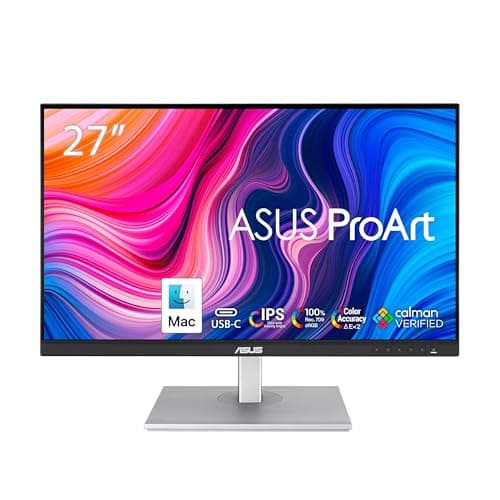
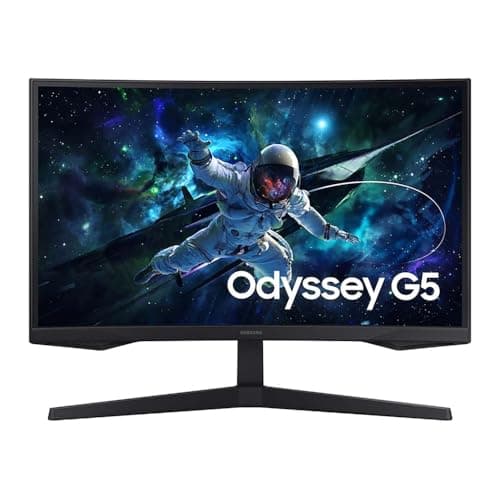
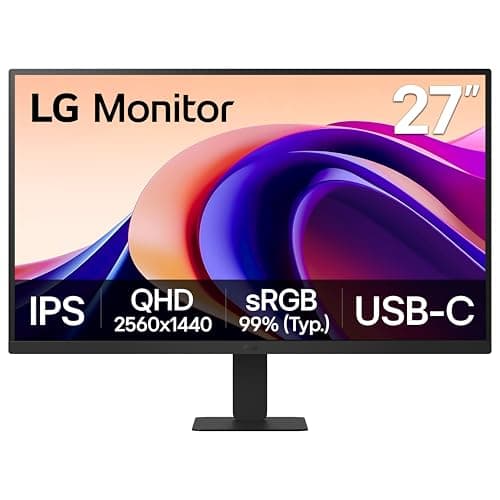
The four panels here are matched pairs at two sizes so the comparison is about shape rather than tier — a curved and a flat option each at ultrawide scale and at conventional desk scale.
The decision, field by field
Viewing geometry. Curved wins, but only above roughly 30 inches or on any 21:9 or 32:9 shape. Below that the distance difference between center and edge is too small to feel, and the two are equivalent. This is the field the whole argument rests on, and it is settled by the width of the panel rather than by preference.
Text and code.A draw, with one caveat. Both shapes render text identically; what matters is pixel density, and that is a function of resolution and size rather than curvature. The caveat is that many curved panels are large and 1440p, which lands them near 92 pixels per inch, while flat panels at 27 inches and 1440p reach about 109. Do not confuse the curve for the cause — check the density.
Design and drafting. Flat wins outright, and it is not close. Anything that depends on straight lines being straight or perspective being true is actively harmed by a curved panel, because you are checking the exact property the curve alters. If this is your work, the decision is made and nothing else on this page changes it.
Mounting.Flat is easier. A curved back can contact a large flat mounting plate before the screws seat, so curved panels need arms sold as curved-compatible with a smaller or shaped plate. Curved panels are also usually the wider, heavier ones, which pushes them past many arms’ ratings. Our VESA guide covers both checks.
Price. Roughly a draw at the same size and resolution. Where curved panels look more expensive, it is usually because the curved options are larger or wider rather than because bending glass costs more. Compare like for like on size, resolution, and panel type and the premium largely disappears.
The verdict
Buy curved if the panel is 34 inches or wider, or any ultrawide shape, and your work is text, code, spreadsheets, video, or games. Buy flat if you do design, drafting, layout, or perspective-sensitive photo work — or if the panel is 27 inches, where the curve buys you a silhouette rather than a benefit. If you are torn at 32 inches, the density question matters more than the shape question: a sharper flat panel will improve your day more than a softer curved one.