Chair mats fail in one of two ways, and both are avoidable. On carpet, a mat that is too thin or too soft flexes under the caster, cracks along the flex line, and starts snagging. On a hard floor, a mat with a studded underside — the kind meant for carpet — grinds those studs into the finish and scratches exactly the surface it was bought to protect.
So the first question is not which mat. It is what is under it.
Carpet needs a mat with a studdedor cleated underside. The studs grip the pile so the mat does not travel, and they transfer the load down through the carpet rather than letting the mat float on it. Manufacturers state a maximum pile depth — commonly “low pile” up to about a quarter inch, or “medium pile” up to about three quarters of an inch including the padding. Buy above your pile depth and the mat rocks; buy below it and it will not grip.
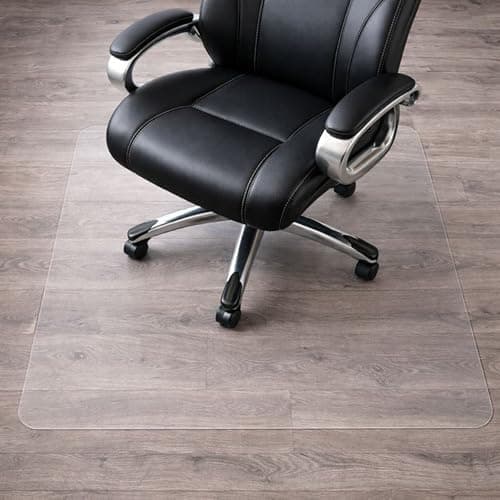
Hard floors— wood, laminate, vinyl, tile — need a smooth underside, usually with a grip texture or non-slip backing rather than studs. A carpet mat on hardwood is the single most common chair mat mistake and it damages the floor within weeks.
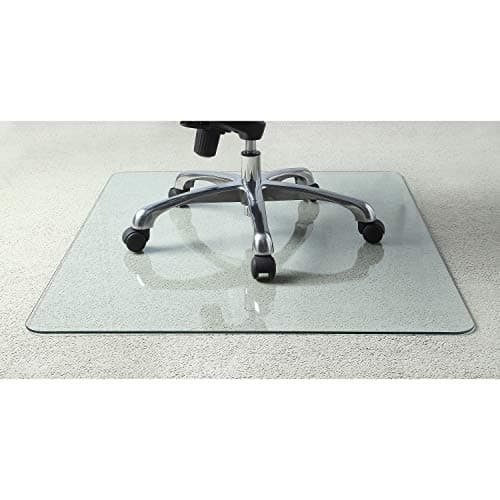
Then the material. Polycarbonate is the premium plastic: it is rigid, does not crack under cold, stays clear rather than yellowing, and can be made thinner for the same strength. PVC or vinyl is cheaper and more flexible, which is fine on a hard floor and a liability on deep carpet where flexing causes the cracking. Tempered glassis the outlier: expensive, extremely heavy, and the only material that works on any floor type without the studded-versus-smooth question arising at all.
One last thing worth knowing: chair mats ship either rolled or flat. A rolled mat needs several days to relax before it will lie down, and some never fully do. Mats shipped flat cost more to deliver and arrive usable, which is why several manufacturers now advertise it as a feature.
If your reason for shopping is noise or floor damage rather than rolling resistance, note that swapping to rollerblade-style casters is a cheaper first move and often solves the problem outright on a hard floor.
If your floor is wood, laminate or vinyl rather than carpet, read the hard floor guide first: the studded underside that anchors a carpet mat in pile is the thing that marks a hard floor.
The short answer
Quick picks
#ad · Live prices from the Amazon Product API, as of October 23, 2026. Where we have no verified live price we show none — we would rather leave a gap than print a number that has rotted.
In detail
The picks, in full
Best for carpet
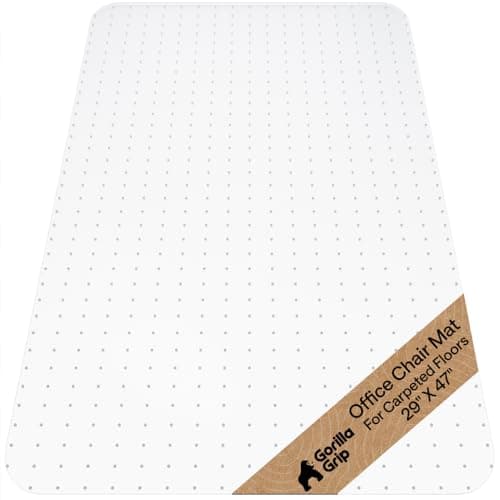
Gorilla Grip Office Chair Mat for Carpet (29 x 47)
- Floor type
- Low-pile carpet
- Size
- 29" x 47"
- Material
- 100% polycarbonate
- Thickness
- Over 0.09"
- Underside
- Studded and spiked to grip carpet
- Weight
- 6.17 lb
The right construction for carpet at a sensible price: 100% polycarbonate with a studded underside, thick enough to spread the load without flexing under the casters.
- Floor Match
- 9.2
- Durability
- 9
- Size & Coverage
- 7.6
- Value
- 9
Pros
- +Polycarbonate rather than PVC, so it resists the cracking that kills cheap carpet mats
- +Studded underside grips low pile properly instead of sliding around
- +Stays clear rather than yellowing, which vinyl mats do within a couple of years
- +Light enough at 6 lb to reposition without help
Cons
- −Rated for low pile - a deep or padded carpet needs a different mat
- −29 x 47 inches is a modest footprint under a wide desk
- −The studs will mark a hard floor if you ever move it onto one
Skip this if…
…your carpet is thick or heavily padded - the studs will not reach through it.
Best for hard floors
Marvelux Polycarbonate Chair Mat for Hardwood Floors (36" x 48")
- Floor type
- Hardwood, laminate, tile and other hard surfaces
- Size
- 36" x 48"
- Material
- 100% pure polycarbonate
- Underside
- Smooth - designed for hard floor use
- Shipping
- Shipped rolled
- Manufacture
- Made in the United Kingdom
The hard-floor pick, and the construction that matters: a smooth underside that will not grind into a finish, in polycarbonate rather than the vinyl that yellows.
- Floor Match
- 9.4
- Durability
- 9
- Size & Coverage
- 8.6
- Value
- 8.8
Pros
- +Smooth underside is the correct construction for hard floors, which studded mats damage
- +Pure polycarbonate stays clear and resists cracking at the caster paths
- +36 x 48 inches covers a normal chair's rolling range under a standard desk
- +Polycarbonate can be thinner for the same strength, so the edge is less of a trip hazard
Cons
- −Ships rolled, so it needs a few days flat before it behaves
- −No lip, so it does not tuck under a desk overhang
- −A smooth-backed mat can creep on a very slick floor
Skip this if…
…your floor is carpeted - a smooth-backed mat will slide around on pile.
Check price on Amazon →No buyable offer at the last price check (October 23, 2026). We show nothing rather than a stale number.
#ad · we may earn a commission from this link to Marvelux Polycarbonate Chair Mat for Hardwood Floors (36" x 48")
Best premium
Lorell Tempered Glass Chairmat (44 x 50)
- Floor type
- Any - high or low pile carpet, hardwood, marble, tile
- Size
- 44" wide x 50" deep
- Thickness
- 0.25"
- Material
- Tempered glass
- Load rating
- Supports up to 1,000 lb
- Warranty
- Limited 5-year
The one that ends the floor-type question. Quarter-inch tempered glass works on carpet of any pile, hardwood, marble or tile, supports 1,000 lb, and will not crack, curve or yellow.
- Floor Match
- 9.8
- Durability
- 9.8
- Size & Coverage
- 9.2
- Value
- 6.4
Pros
- +Works on every floor type, which removes the single most common buying mistake
- +1,000 lb rating means a big-and-tall chair and its occupant are nowhere near the limit
- +Glass never yellows, cracks at the flex line or develops caster ruts
- +44 x 50 inches is the largest useful coverage here for a standard desk
Cons
- −By far the most expensive mat on this list
- −Extremely heavy - a two-person job to place and effectively permanent once down
- −Hard glass is unforgiving if something is dropped on it edge-on
Skip this if…
…you move your desk often - this is a mat you install, not one you reposition.
Best for a large area
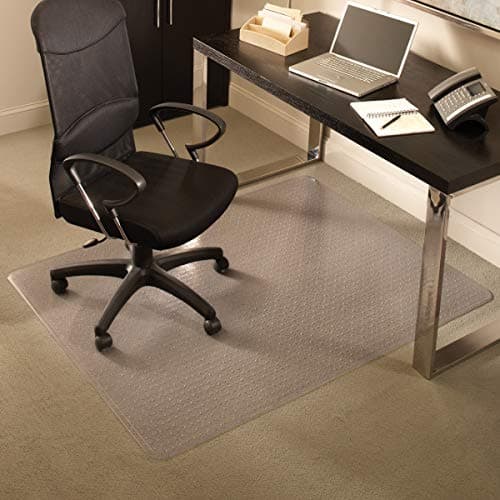
ES Robbins EverLife Carpet Chairmat, Medium Pile (60" x 72")
- Floor type
- Medium pile carpet, up to 0.75" including padding
- Size
- 60" x 72"
- Material
- Vinyl, GREENGUARD Gold certified for low chemical emissions
- Underside
- Rounded AnchorBar cleats
- Edge
- Beveled for easy transition on and off the mat
- Warranty
- Limited lifetime "no crack" warranty on carpet mats 1/4" and above
The big one, and the only mat here rated for medium pile. Sixty by seventy-two inches covers the whole working area rather than a patch, with AnchorBar cleats that grip properly.
- Floor Match
- 9
- Durability
- 8.6
- Size & Coverage
- 9.8
- Value
- 8.4
Pros
- +Rated for medium pile up to 0.75 inches including padding, where most mats stop at low pile
- +60 x 72 inches covers a whole desk area including where you push back to stand
- +Rounded cleats grip carpet without being harsh on hands during installation
- +GREENGUARD Gold certification, which matters for a large plastic object in a small room
Cons
- −Vinyl rather than polycarbonate, so it is more flexible and less clear
- −At this size it is heavy and awkward to position alone
- −Ships rolled and needs time to settle flat
Skip this if…
…your desk area is small - a 60 by 72 inch mat will dominate a compact room.
Best budget
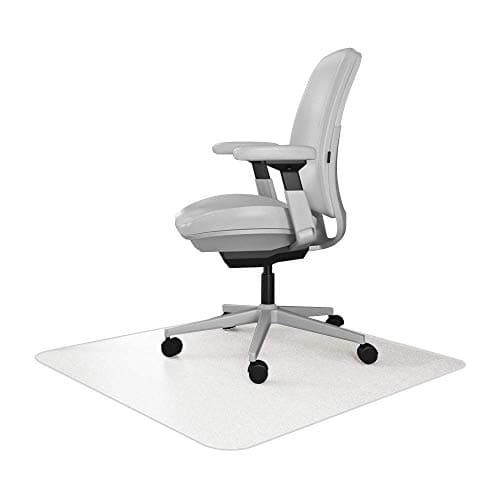
Resilia Office Chair Mat for Low Pile Carpet (30" x 48")
- Floor type
- Low pile carpet
- Size
- 30" x 48"
- Material
- Heavy-duty repurposed PVC vinyl
- Underside
- Non-slip grippers
- Chemistry
- Phthalate free, no Proposition 65 contaminants
- Manufacture
- Made in the USA
The budget carpet mat that does the important things right: grippers underneath, heavy-duty vinyl, and made from repurposed material without the chemistry you would rather not have in a small room.
- Floor Match
- 8.6
- Durability
- 7.6
- Size & Coverage
- 7.4
- Value
- 9.6
Pros
- +Cheapest mat here and still has a proper gripped underside for carpet
- +Phthalate-free and Prop 65 clean, which is not standard at this price
- +Waterproof and flexible enough to survive being rolled and repositioned
- +Available in clear or black, which matters if the mat is visible in a living room
Cons
- −Vinyl flexes more than polycarbonate, so it is more prone to caster ruts over years
- −Low pile only
- −30 x 48 inches is the smallest coverage on this list
Skip this if…
…you are heavy or your chair spends all day rolling the same track - vinyl will rut before polycarbonate does.
Measure the pile before you buy anything
Push a ruler or a pen into the carpet until it stops, and note the depth including any underlay you know about. Under a quarter inch is low pile; up to about three quarters of an inch including padding is medium. Above that you are into thick or plush carpet, and most chair mats will rock on it regardless of construction.
Then check the underside of any mat you are considering. Studs or cleats mean carpet. Smooth means hard floor. There is no mat that does both well in plastic — which is the entire argument for the tempered glass option, and why it costs what it does.
Size it by where the chair goes, not by the desk
The area that needs protecting is not under the desk. It is the arc your chair travels through: forward under the desk, back to stand up, and side to side to reach a printer or a second surface. Most people underestimate the backward travel. A mat that stops six inches behind the desk edge means the casters drop off it every time you get up, which wears both the mat edge and the floor.
A useful rough figure: 36 by 48 inches covers a standard desk with normal movement. Anything wider than about 60 inches of desk, or a corner setup, wants a larger mat or a lipped one that tucks under the desk overhang.
Lip or no lip?
A lipped mat has a tongue that extends forward under the desk, so the main body sits in the open where the chair actually moves. It uses the space more efficiently in a corner or knee-hole desk. A rectangular mat is simpler, works with any desk shape, and is easier to reposition. Neither is better; lipped mats just need to match your particular desk layout.
Consider the casters instead
If the reason you are buying a mat is that the chair rolls badly on carpet or skates and marks a hard floor, swapping the casters is a cheaper experiment. Most office chairs ship with hard nylon wheels intended for carpet; wider rubber rollerblade-style casters roll properly on both surfaces and do not mark. It is a ten-minute job with no tools, and on a hard floor it often removes the need for a mat altogether. The one thing to check is the stem diameter, because chair stems are not standardized.
Let a rolled mat settle
A mat shipped rolled will curl at the corners for days. Unroll it, lay it flat with something heavy on the corners, and give it 48 to 72 hours in a warm room before judging it. Trying to use a curled mat immediately is how corners get creased permanently.
Where a mat is the wrong purchase entirely
If you use a standing desk and spend real time on your feet, what you want underfoot is an anti-fatigue mat, which is a completely different product: soft, thick and designed to be stood on rather than rolled over. Some desks need both, in which case they occupy different areas of the floor.
Essentials
The small parts that finish the job
Nothing here changes a pick above, and none of it is a considered purchase. These are the cheap pieces that decide whether the expensive one works properly, and the ones people discover they are missing on the day the big box arrives.
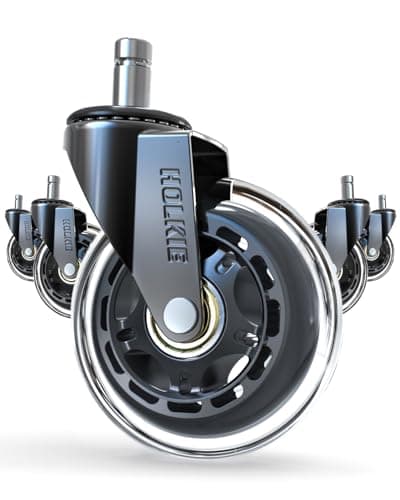
HOLKIE Rollerblade-Style Chair Casters, 3 in (set of 5)
The cheapest real upgrade a chair you already own can take. Hard nylon wheels fight carpet and skate on hard floors; wider rubber casters roll on both and stay put when you sit down.
Check first: chair stems are not standardized. Pull one existing caster out and measure its stem diameter and length against the listing before ordering.
#ad · Live prices from the Amazon Product API, as of October 23, 2026. Where we have no verified live price we show none. We may earn a commission, at no extra cost to you.
How we picked
We do not run a testing lab
We compiled the published manufacturer specifications, did the ergonomics, VESA and desk-depth math ourselves, and read aggregated owner reviews, then scored each product against a published rubric. The scores are judgments from documented research — they are not measurements we took, because we do not have a lab and we are not going to pretend we do. Every spec traces back to a listing or manual named in Sources.
Questions
Frequently asked
Do I need a chair mat on carpet?+
If you use a rolling chair on carpet, yes — casters compress and wear a track into the pile within months, and rolling on carpet takes real effort without one. Choose a mat with a studded underside rated for your pile depth; a smooth-backed mat will slide around on carpet.
Will a chair mat damage my hardwood floor?+
The wrong one will. A mat with a studded underside — designed for carpet — grinds those studs into the finish and scratches it. For hard floors, buy a mat with a smooth underside and a grip texture or non-slip backing instead. This is the most common chair mat mistake.
What size chair mat do I need?+
Size it by where the chair travels, not by the desk. Around 36 by 48 inches covers a standard desk with normal movement, including pushing back to stand. Wide desks and corner setups want more, either a larger rectangle or a lipped mat that tucks under the desk overhang.
Is polycarbonate or vinyl better for a chair mat?+
Polycarbonate is more rigid, stays clear rather than yellowing, and resists the cracking that kills cheap carpet mats along the flex line. Vinyl is cheaper and more flexible, which is fine on a hard floor and a liability on deep carpet under a heavier sitter.
Are glass chair mats worth it?+
They solve the floor-type problem outright — tempered glass works on any surface, will not crack, curve or yellow, and typically carries a very high load rating. The costs are price and weight: a glass mat is a two-person installation and effectively permanent once placed.
Can I use a chair mat on a thick or plush carpet?+
Most mats will rock on deep pile because the studs cannot reach through to a firm layer. Look specifically for a mat rated for medium pile — usually up to about three quarters of an inch including padding — and check the rating before buying. On very thick carpet, tempered glass is the reliable answer.
Receipts
Sources
We do not run a testing lab, and we do not pretend to. Specifications come from the manufacturer or retailer listing; the footprint and clearance math is ours and reproducible. Where we could not verify a number, we say so on the page rather than quietly leaving it out. Read our full method.