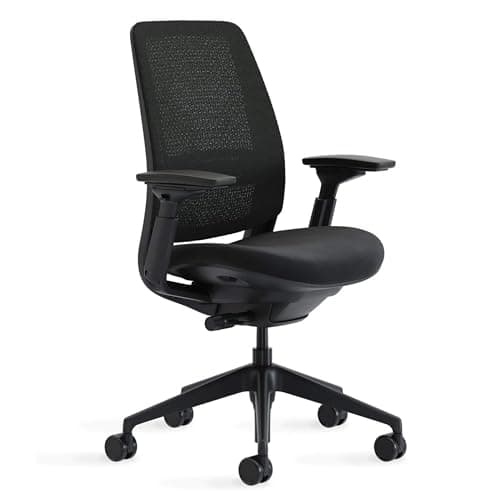
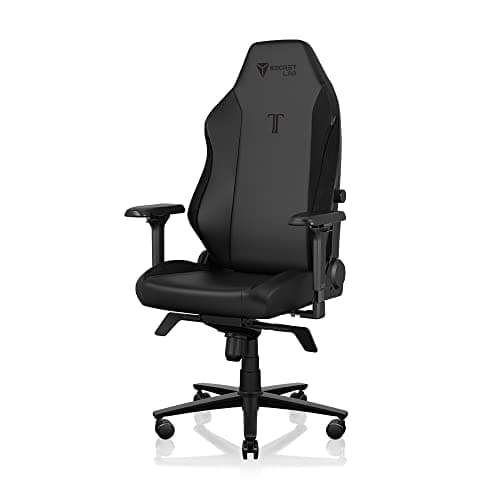
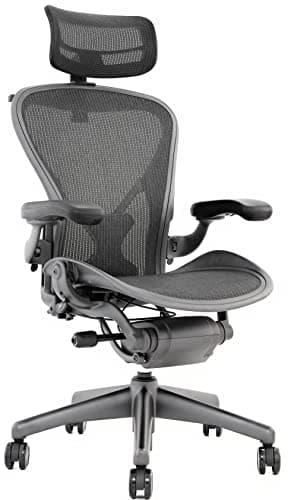
A premium task chair lasts as long as its published warranty suggests, and the warranty is the most honest number on the spec sheet: the Herman Miller Aeron carries a 12-year, 3-shift limited warranty and the Steelcase Series 2 covers its structure for life and its mechanisms for 12 years. A good budget chair carries three. That gap is not marketing — it is the manufacturer telling you how long they expect their own gas lift, mesh and mechanism to hold up under daily use.
What matters more than the headline number is what fails, because chairs almost never break in a single event. They degrade through four or five specific components, in a fairly predictable order, and whether you can buy those components separately is what actually decides a chair's lifespan.
What fails, in the order it fails
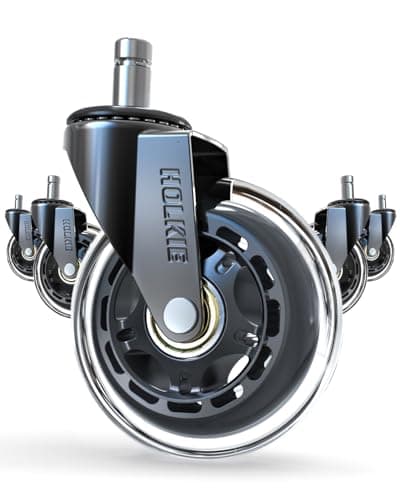
1. Casters, in year one or two.The first thing to go, on every chair at every price. Hard nylon wheels pick up grit, flat-spot, and either skate on hard floors or dig into carpet. They are also the cheapest part to replace and the only repair most people will ever do themselves — the caster set in the essentials below is the fix, with the caveat that stem sizes are not standardised.
2. The gas lift, around years three to seven on a budget chair. The symptom is unmistakable: the seat slowly sinks while you sit on it. The cylinder is a sealed pneumatic part and it is not serviceable, but it is a standard component on most chairs and replaceable for a modest amount. On a premium chair this is squarely inside the warranty; on a cheap one, the cylinder may cost a meaningful fraction of what the chair did.
3. Armrest pads, continuously. Soft polyurethane pads crack and peel from forearm contact and skin oils. They are cosmetic right up until the cracked edge is catching your arm. The premium makers sell them as spares; most budget chairs do not sell them at all, which is why a three-year-old cheap chair looks far worse than it works.
4. Seat foam, years two to five. Cold-cure and high-density foams outlast cut foam by a wide margin, but all foam compresses, and a compressed seat changes your seated height and tips your pelvis. This is the failure that quietly undoes the ergonomics you paid for, and it is the hardest to notice because it happens a millimetre at a time. A genuine tensioned mesh seatavoids the problem entirely — there is no foam to compress.
5. The mechanism, last. The tilt housing, the tension knob and the seat-depth slide. When this goes, the chair stops holding a recline position. On the chairs with 12-year mechanism warranties, this is the component that warranty is about.
Read the warranty as three separate promises
A single number hides the structure. Steelcase covers the Series 2 structure for life and mechanisms for 12 years— two different terms in one sentence. Herman Miller's Aeron warranty is 12 years at 3 shifts, which means it is rated for roughly round-the-clock use rather than one person's eight-hour day. Secretlab covers the Titan Evo for 5 years, and Hbada's budget mesh chair for 3.
The questions worth asking of any warranty: does it cover the gas cylinder, does it cover the upholstery and foam, and is it transferable? Resale value on a Herman Miller or Steelcase chair exists partly because the answer to the last one is often yes, and partly because spare parts are available a decade later.
The arithmetic that actually decides it
Divide the price by the warranty years and the comparison stops being about absolute cost. A chair with a 12-year warranty at four times the price of a three-year chair costs the same per year — and you avoid three rounds of delivery, assembly and disposal along the way. That is the honest case for a flagship, and it is why the Aeron versus Steelcase comparison treats cost of ownership rather than sticker price as the fair measure.
The honest case against: a cheap chair you replace is a chair you get to re-choose as your body and desk change, and a 12-year commitment to a chair that does not fit you is the worst outcome of all. Measure first — the sizing guidecovers the four measurements — because fit is the one thing no warranty covers.
How to make the chair you own last longer
Replace the casters early. Rolling resistance is what loads the base and the stem. Soft rubber casters roll on both carpet and hard floor and stop the chair skating out from under you.
Use a mat if you are on carpet. A chair mat reduces the effort every movement takes and keeps grit out of the wheels.
Set the tension and leave it.Repeatedly cranking a tilt-tension knob through its full range is how mechanisms wear. Set it once for your weight — the adjustment guidehas the order — and stop touching it.
Do not sit on the armrests. Obvious, universally ignored, and the most common cause of a cracked armrest mount on a chair under five years old.
Check the bolts once a year. Seat-plate and base bolts work loose under thousands of recline cycles, and a loose seat plate feels exactly like a failing mechanism.
One failure runs on its own schedule and is a cheap part rather than a dead chair: the gas cylinder. Why your chair keeps sinking has the two-minute diagnosis and both fixes.
Published warranty terms, side by side
| Chair | Published warranty | Seat type | Spares available? |
|---|
| Herman Miller Aeron | 12 years, 3-shift limited | Suspension mesh (no foam) | Yes, through Herman Miller |
| Steelcase Series 2 | Lifetime structure; 12 years mechanisms | Upholstered foam | Yes, through Steelcase dealers |
| Secretlab Titan Evo | 5 years | Cold-cure foam | Some parts, direct |
| Hbada J3 | 3 years | Foam seat, mesh back | Not in practice |
The Steelcase Leap V2 belongs in this conversation too, with a 400 lb capacity and a 12-year mechanism warranty of its own — Aeron versus Leap V2 compares the two flagship approaches directly.
Which failure can you actually fix?
Casters: always. Any chair, any price, ten minutes. Pull one out and measure the stem before ordering, because stems are not standardised.
Gas lift: usually. Standard-diameter cylinders are widely available and the swap is a mallet-and-pipe-wrench job. The exception is a proprietary cylinder on a designer chair, where the official part is the only part.
Armrest pads: only if the maker sells them. This is the sharpest premium-versus-budget divide on the whole list.
Seat foam: rarely worth it. Re-foaming costs more than most chairs and the result is never quite the original. A mesh seat sidesteps it.
Mechanism: no. Under warranty it is a claim; out of warranty it is the end of the chair. This is the component the 12-year terms are really about.
Signs it is time to replace rather than repair
The seat sinks while you sit. Gas lift. Cheap to fix on a chair worth fixing.
The recline will not hold anywhere. Mechanism. On an out-of-warranty budget chair, this is the end.
You have started putting a cushion on it. The foam has gone, and the cushion is now setting your seat height to something you did not choose.
Your back hurts in a chair that used to be fine. Compressed foam and a stretched mesh back both change the support geometry gradually. Chairs for back pain covers what to look for in the replacement, and long-hours chairs covers what fails late in the day rather than late in the decade.