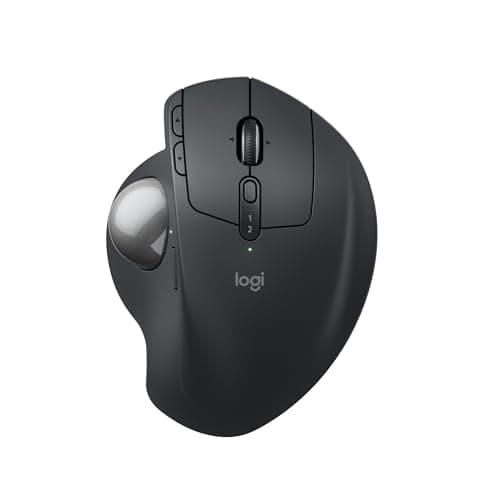
Every conventional mouse, vertical or flat, works the same way: to move the cursor you move your whole arm. Over a working day that is thousands of small shoulder and elbow movements, and it requires a clear patch of desk large enough to make them in. A trackball removes both requirements at once. The device stays still and you roll a ball with a thumb or fingers, so the cursor travels while your arm does not.
That makes trackballs the right answer to two specific situations. The first is a desk with no room — a corner setup, a standing desk with a shallow tray, a train table, a desk where a very wide monitor has eaten the surface. A trackball needs only its own footprint, permanently. The second is shoulder or upper-arm strain, where the repeated reaching is the problem rather than the wrist angle. If that is your complaint, a vertical mouse improves the wrong thing; a trackball addresses it directly.
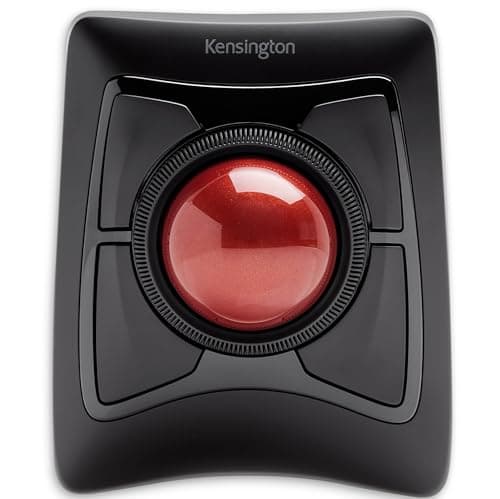
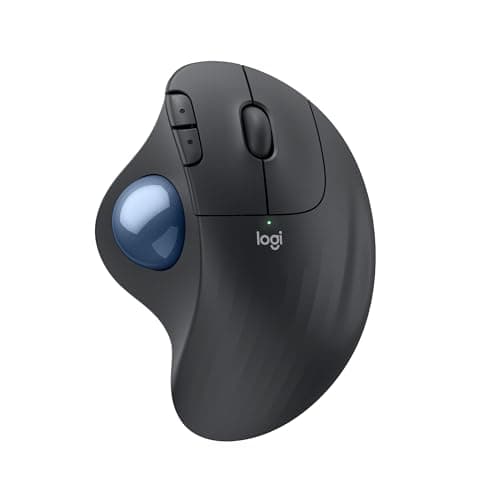
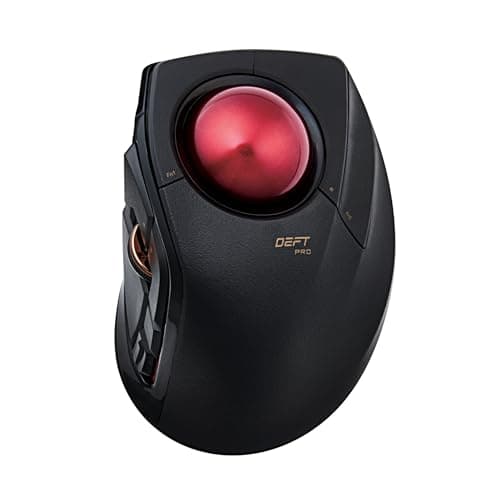
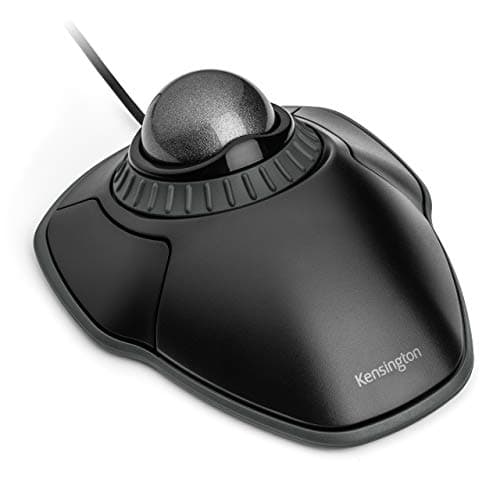
The format splits into two families, and the choice between them is more consequential than the choice of model. A thumb-operated trackball puts a small ball where your thumb rests, so the hand posture is essentially that of a normal mouse and the learning curve is short. It also loads the thumb, which is a poor choice if your thumb is the thing that hurts. A finger-operatedtrackball uses a much larger ball driven by the index and middle fingers, which spreads the work across stronger digits and gives noticeably better precision — at the cost of a bigger device and a longer adjustment.
The honest downside is precision, and it depends on which family you pick. A thumb ball is fine for documents, browsing, and code, and frustrating for detailed image work. A large finger ball with a good bearing gets close to mouse-grade accuracy once you are practiced, which is why they persist in CAD and editing rooms. Neither is a gaming device. Scores below come from published specifications, the geometry of each design, and aggregated owner reports, per how we pick.
How to choose a trackball
Pick the family first, because it is the decision that matters. Thumb- operated trackballs keep your hand in a familiar mouse posture, adapt in a few days, and load the thumb. Finger-operated trackballs use a bigger ball driven by the index and middle fingers, which gives clearly better precision and spreads the effort across stronger digits, at the cost of a larger device and a longer adjustment. If your thumb already hurts, that choice is made for you.
Then be clear about which problem you are solving. A trackball is the answer to a shoulder or upper-arm complaint and to a desk with no room. It is not primarily a wrist device — if your wrist is the issue, a vertical mouse targets it more directly. Buying the wrong format for your complaint is the most common way people conclude that ergonomic peripherals do not work.
Check the footprint honestly if desk space is the motivation. A trackball needs no sweep area, which is a genuine saving, but a large finger-operated model is itself a big object. On a really tight desk, a compact ball beats a large one even though the large one is more precise. On a desk that just lacks sweep room, take the precision.
Finally, plan for maintenance and for the adjustment period. Every trackball needs its ball lifting out and the bearings wiping every few weeks; skip it and the smoothness goes. And give yourself two weeks before judging — cursor control returns within days, but the fine accuracy takes longer, and most abandoned trackballs were abandoned in week one. A large desk mat and a chair with proper armrests both help, because a supported forearm is what makes a still-arm device comfortable.