Desk accessories are the cheapest category on this site and the easiest one to spend badly in, because most of them are bought as decoration and only some of them fix a problem. The useful way to order them is by payoff: what does this change about how the setup works, and would fixing it another way be cheaper? On that basis there is a clear priority order, and it is not the order most people buy in.
The order that actually works
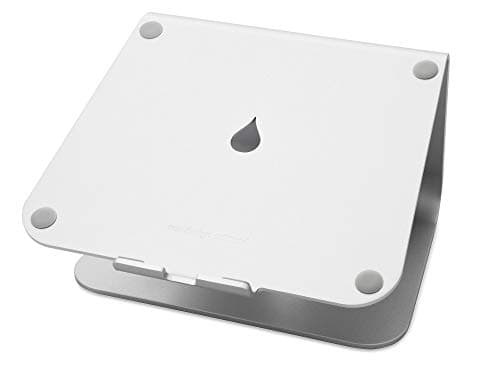
- Screen height. If you work on a laptop, its screen is far below eye level and your neck pays for it every day. A laptop stand plus a separate keyboard fixes it for the price of a meal out. If you already use an external monitor, the equivalent purchase is a monitor arm or a riser. This is first because it is the most common unfixed ergonomic fault and the cheapest one to close.
- Foot support, if your feet dangle. Second only because it applies to fewer people. If raising your chair to reach the desk left your feet off the floor, a footrest costs very little and undoes a real problem. Check with the measurement in how high should your desk be.
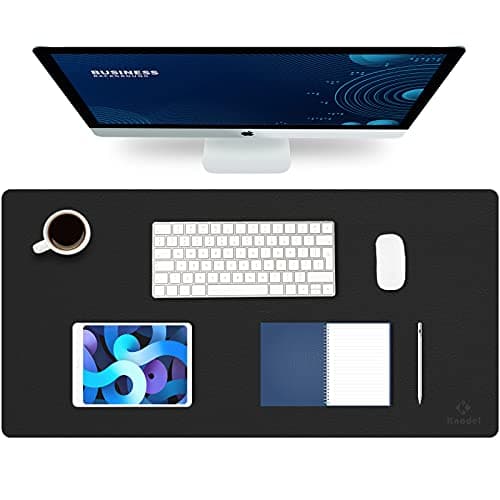
- The surface. A large desk mat gives the keyboard and mouse one consistent surface, quiets typing, and protects the desktop. It is not ergonomic, but it is the cheapest change that makes a setup feel finished.
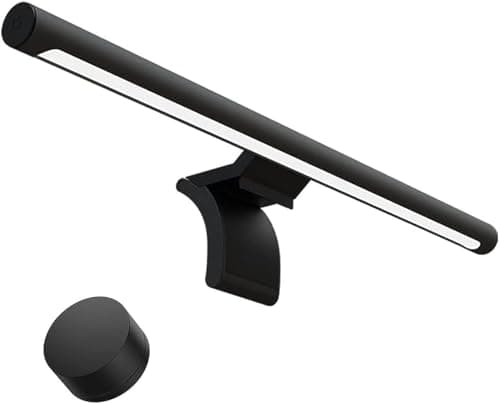
- Light. A monitor light bar is the one accessory people consistently underrate. Looking at a bright screen in a dark room is the cause of most evening eye strain, and an asymmetric bar fixes it without the glare a lamp behind the monitor creates. A desk lamp does the job too if you have the space.
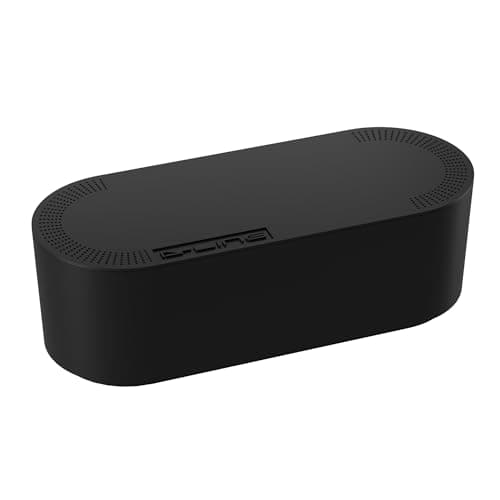
- Cables. Last, because it changes nothing functional and everything visual. A cable box and a tray turn the worst-looking part of any desk into something you never look at.
Why this order and not the popular one
The accessories that get bought first are usually the ones that photograph well: the mat, the headphone stand, the little wooden tray. The accessories that change how the setup works are the boring ones that alter where your body is — the stand that raises the screen, the footrest that gives your legs a floor. If money is limited, buy in the order of what your body notices, then buy the things your eyes notice.
There is also a sequencing reason. Cable management should be last because everything before it adds a cable. Tidying before you have finished adding devices means doing it twice, which is the single most common wasted afternoon in this hobby.
The accessories worth skipping, and what to buy instead
- Monitor stands, if the monitor has VESA holes.A riser lifts a screen to one fixed height. An arm lifts it to any height and returns the desk underneath, for not much more. Buy the riser only when there is no VESA pattern or no clampable edge — the cases are in monitor arm vs stand.
- Wrist rests bought before positioning is fixed.A rest cannot compensate for a keyboard tilted up on its feet or a desk at the wrong height. Fix those first — both are free — and then buy a rest at the height that matches your board, per the wrist rests roundup.
- A second desk lamp when the problem is a window. If you are backlit on calls, move the desk. No accessory beats turning around.
- Desktop organizers, until the drawers are full.Things on the desktop are things on the desktop, whether or not they are in a tray. Storage that is not on the working surface — a drawer, a shelf — does more.
How much to spend on this layer
Accessories are the last 10 percent of a setup’s budget and often the first 40 percent of how it feels. That is the argument for buying them — and also the argument for not buying them before the monitor, desk, and chair are right, because no accessory rescues a screen at the wrong height on a desk that is too tall. If you are building rather than refining, the order of the whole build is in the complete desk setup guide, and desk setup ideas covers the layouts these pieces fit into.
Two accessories change the shape of the desk rather than adding to it, and both have a fit check to do first. A monitor arm gives you back the whole footprint under the screen — how to install a monitor arm covers the four measurements that decide whether one will mount to your desk. And if you work from a laptop, the laptop desk setup guide is the cheapest ergonomic upgrade on this list.
A desk that rises needs four parts a fixed desk never does: a cable spine, power at desk height, something underfoot, and a keyboard at elbow height in both positions. The standing desk accessory roundup covers those separately.