SECTION 02
The surface that sets the ceiling for your setup
Sit-stand or fixed, single motor or dual - why the frame under the desk matters more than the top on it.
We earn a commission when you buy through our Amazon links, at no extra cost to you. It never affects our rankings, and we say so when the cheaper product is the better buy. How this works.
Start here
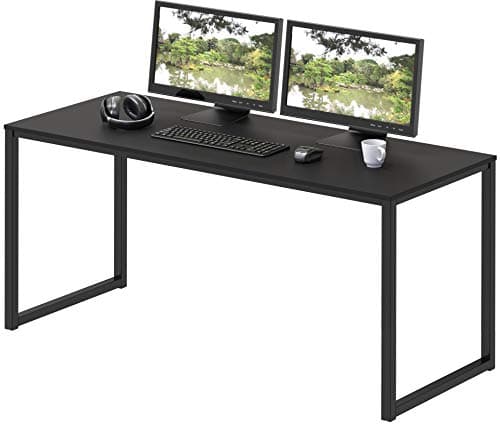
The best home office desks, judged on width, depth, and frame
The fixed home-office desks that get the dimensions right - roughly 48 inches wide, 24 deep, on a steel frame that stays still while you type. Winner: the SHW Mission 48.
Best Overall Desk · SHW Mission 48" Home Office Computer Desk
$89.97View on AmazonA desk is the slowest part of a setup to replace and the one that quietly caps everything on top of it. Its depth decides how far back a big monitor can sit, its height decides whether your wrists and neck stay neutral, and its stability decides whether a standing session feels solid or seasick. If you are upgrading from a fixed slab to something that moves, this is where the real money and the real decisions live.
The number that decides the buy: height range
For a sit-stand desk, the spec that matters most is the travel range — the lowest and highest the surface goes. Standard fixed desks sit around 29 inches, which is already too tall for many people even seated. A good electric standing desk should drop low enough that your elbows rest near 90 degrees when seated and rise past 45 inches so taller users can stand comfortably. Measure your own seated and standing elbow heights first, then match the range to your body rather than to the marketing. The best standing desks roundup ranks frames by that usable range and by how steady they stay near the top of it. Do not skip this measurement; a desk that photographs well but bottoms out two inches too high will quietly wreck your shoulders over a working week, and no monitor arm or chair can undo a surface set at the wrong height.
How the category divides into types
The first split is fixed versus sit-stand. A well-built fixed desk is cheaper, rock-solid, and right for anyone who will not actually use height changes — see the best home-office desks for that path. If you will alternate, the honest case for and against is laid out in standing desk vs sitting. Within sit-stand desks, the next fork is the motor: a single-motor frame is cheaper but slower and less stable at height, while a dual-motor frame — one in each leg — lifts more evenly and holds a heavy monitor rig without wobble. The last fork is the top itself: a 48×24-inch surface suits a single monitor, while a 60×30 or 72×30 top is what you want for an ultrawide or a dual-arm layout. Material matters at the top too: laminate is durable and cheap, bamboo is light and unusually stiff, and solid hardwood is heavy and premium — and that weight is worth watching, because a heavier top asks more of the motors and the anti-collision sensors every time the desk rises.
What actually decides the price
Two desks with identical tops can differ sharply in price, and almost all of that gap is the frame. You are paying for dual motors, a wider height range, higher load capacity — better frames are commonly rated in the 250-to-350-pound region — and the bracing that kills the swaying most cheap standing desks suffer at full extension. Programmable memory presets, anti-collision sensors, and a longer frame warranty are the other premiums. The desktop finish adds cost too, but a solid frame under a plain top will outlast a beautiful top on a shaky frame every time.
The mistake buyers make, and where to start
Most buyers shop the desktop and ignore the frame, then wonder why their monitor trembles every time they type standing up. Judge the frame first, the surface second. The second mistake is forgetting that a desk which moves turns every cable into a moving cable: a dock, monitor, and charger that were tidy at sitting height will yank tight when the desk rises unless you plan for the travel. Route everything on a powered rail or tray — our under-desk cable management guide and the under-desk cable kitsroundup cover exactly that — and give a large monitor the depth it needs by pairing the desk with the right monitor arm. Start with the pillar desk setup guide to see how the desk anchors the rest of the build.
Everything in this hub
All standing desks guides
Roundup
The best home office desks, judged on width, depth, and frame
The fixed home-office desks that get the dimensions right - roughly 48 inches wide, 24 deep, on a steel frame that stays still while you type. Winner: the SHW Mission 48.
Top pick · SHW Mission 48" Home Office Computer Desk
Roundup
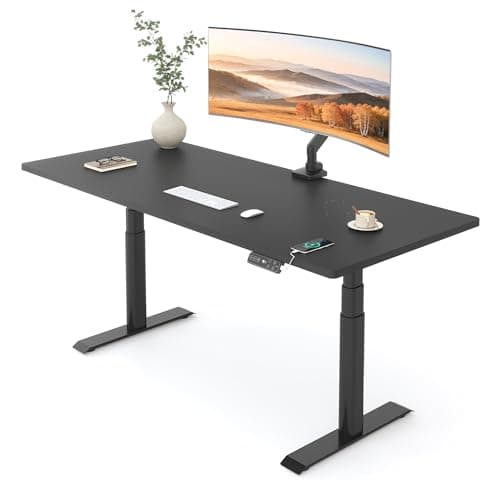
The best standing desks, judged by the frame under the top
Electric sit-stand desks ranked on the numbers that decide a good one - height range, motor count, capacity, and steadiness at full height. Winner: the FlexiSpot E6 Pro.
Top pick · FlexiSpot E6 Pro Dual-Motor Standing Desk (55×28")
Comparison
Standing desk vs sitting desk: which one should you buy?
A head-to-head on sit-stand versus fixed desks - cost, steadiness, and ergonomics - with the honest note that alternating beats standing all day. Picks: FlexiSpot E6 Pro or the SHW Mission 48.
Top pick · FlexiSpot E6 Pro Standing Desk
Roundup
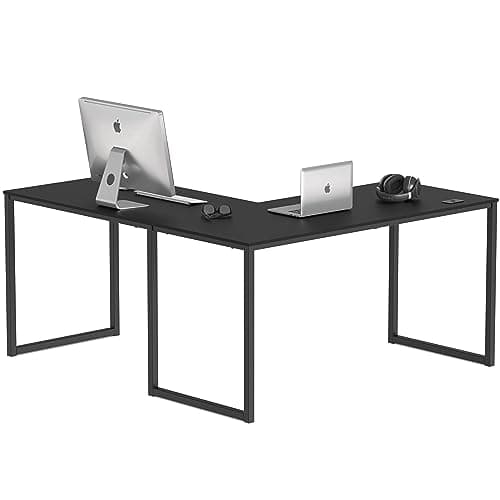
The Best L-Shaped Desks
L-shaped desks ranked for corner and multi-monitor setups — reversible frames, storage variants, and a height-adjustable L — with the real footprint each one needs.
Top pick · SHW Mission 55 x 60 L-Shaped Home Office Desk
Roundup
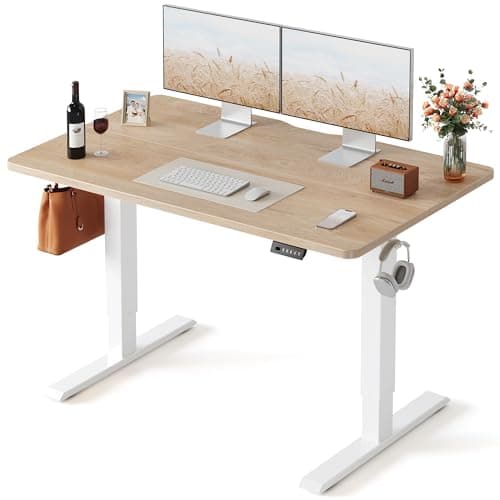
The Best Budget Standing Desks
Budget electric standing desks and desktop converters ranked on lift capacity, wobble at full height, and warranty — with a clear account of what the low price gave up.
Top pick · FEZIBO Electric Standing Desk, 48 x 24
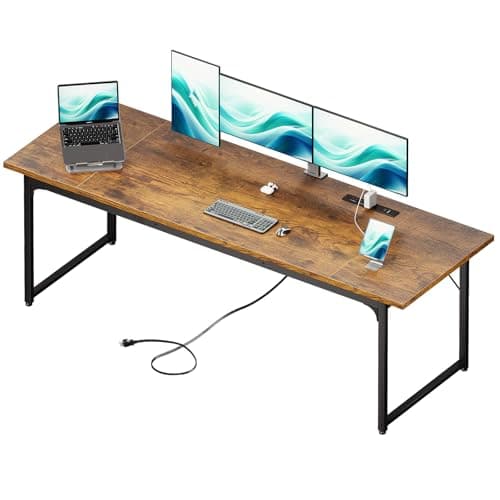
Roundup
The Best Desks for Dual Monitors
Desks with the width, depth, and clampable edge a two-screen setup actually needs - measured against real monitor footprints rather than marketing dimensions. Winner: the Coleshome 79-inch.
Top pick · Coleshome 79" Large Computer Desk
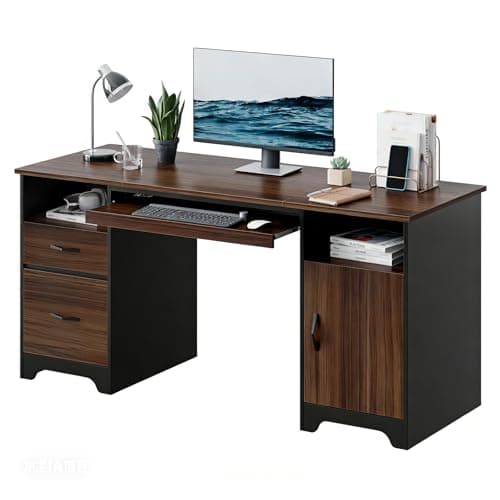
Roundup
The Best Desks with Drawers
Home office desks with genuine drawer storage, judged on the desktop you keep, the runners the drawers ride on, and what the pedestal costs you underneath. Winner: the Bestier 59-inch.
Top pick · Bestier 59" Office Desk with File Drawer, Keyboard Tray and 2 Drawers
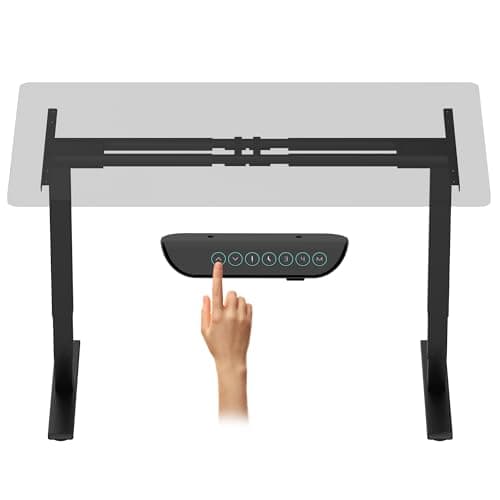
Roundup
The Best Standing Desk Frames
Frame-only standing desk bases ranked on lift stages, weight rating, height range and the tabletop sizes each one supports - including one hand-crank option.
Top pick · FLEXISPOT E6 Max Dual Motor 3-Stage Frame (Frame Only)
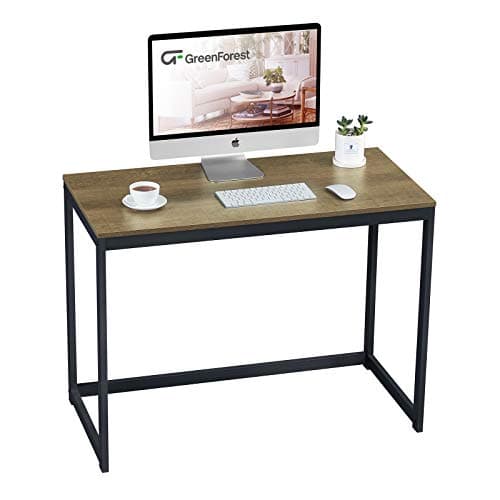
Roundup
The Best Small Desks
Compact desks from 31 to 42 inches wide, ranked on usable depth, frame stiffness and whether an arm can clamp to them - with the measurement to take before you buy.
Top pick · GreenForest 40-Inch Computer Desk for Small Spaces
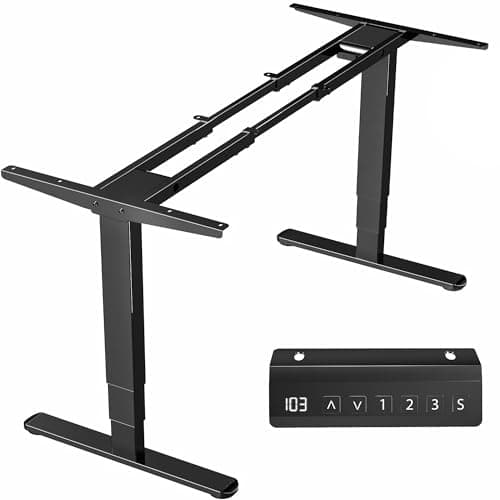
Comparison
Electric or Manual Standing Desk?
Motorized against hand-crank on switching friction, weight capacity, height range, failure modes and cost - with the one situation where the crank genuinely wins.
Top pick · VIVO Electric Dual Motor Desk Frame (the electric case)
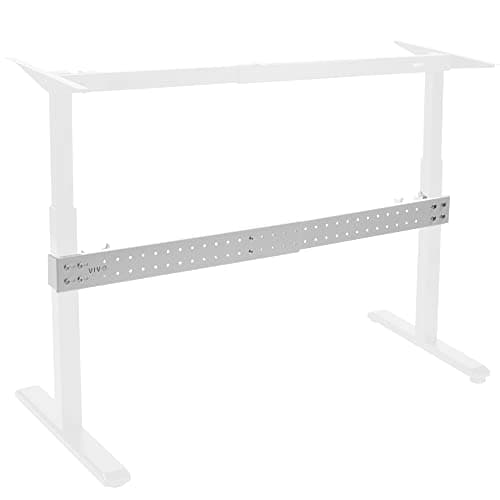
Guide
How to Fix a Wobbly Standing Desk
The diagnosis order for a wobbly sit-stand desk - feet, bolts, crossbar, height, load - plus the two hardware fixes worth buying and the point at which the frame is the answer.
Top pick · VIVO Universal Steel Clamp-On Desk Stabilizer Bar (DESK-STB01)
Complete the setup
A setup is a system — finish it
- Monitors & ArmsUltrawide versus dual, IPS versus OLED, and the mount that reclaims your desk - picking the panel you will stare at all day.
- Ergonomic ChairsAdjustability, sizing, and the difference the premium brands actually buy for eight-hour days.
- Keyboards & MiceSplit, tented, mechanical, vertical - choosing the shape that keeps your wrists neutral, then the feel you like.