Buy a task chair if you spend most of your day upright at a keyboard. Buy a gaming chair if you spend a large share of your time reclined, you want a headrest, and you accept a warmer seat in exchange. That is the honest split, and it is narrower than either camp usually admits.
The comparison, on what actually differs
| | Racing-style gaming chair | Ergonomic task chair |
|---|
| Back shape | Fixed bucket shell with side bolsters | Flexing back that changes shape as you move |
| Lumbar support | Usually a loose pillow; the good ones integrate it | Built in, adjustable for height and often firmness |
| Recline | Up to about 165°, lockable | Typically 120–135°, tension controlled |
| Surface | PU leatherette or fabric over foam | Mesh, or foam with a mesh back |
| Heat | Traps it — the main long-session complaint | Moves air through the contact surface |
| Seat width | Narrowed by bolsters | Flat and open, easy to shift on |
| Typical warranty | 2–5 years | 5–12 years |
Where the bucket shape comes from, and why it matters
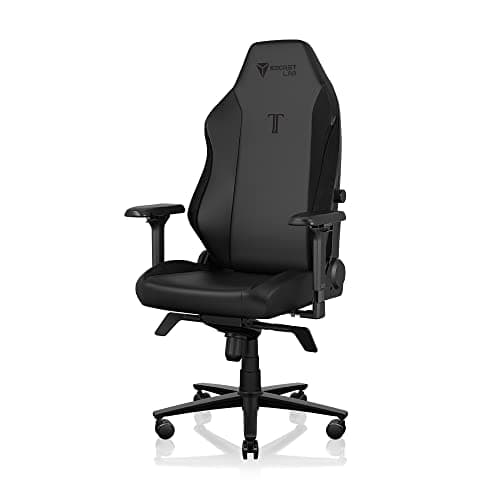
The racing-seat silhouette exists to hold a driver in place against lateral g-force. That job requires tall side bolsters and a narrow, deeply shaped seat, and it is completely unrelated to sitting at a desk. At a keyboard, those bolsters do two things: they stop you shifting position, and they narrow the usable seat.
Shifting position matters more than most people realize. Nobody sits in one posture for eight hours; you lean, you cross a leg, you slide forward to read something. A flat, open task-chair seat lets that happen without thinking. A deeply bolstered seat resists it, which is why long sessions in a racing chair often end with the specific ache of having been held in one shape.
The lumbar pillow problem
The single biggest difference between a cheap gaming chair and a good one is whether the lumbar support is built in. Most racing chairs ship with a strap-on cushion, and a strap-on cushion has no fixed relationship to your spine — it migrates, it gets shoved aside, and within a week most people have taken it off.
A chair with an internal, adjustable lumbar mechanism — the Titan Evo on this page is one — is doing the same job a task chair does, just with a different shell around it. If you are buying a gaming chair, that is the specification that separates a real chair from a shaped foam block. The general case for lumbar fit is in best office chairs for back pain.
Heat is the complaint that arrives in month two
PU leatherette does not breathe. In a cool room this is fine. In a warm room, after three or four hours, it is the thing people notice and then stop being able to un-notice — and it is the most common reason a gaming chair gets replaced by a mesh chair rather than by another gaming chair. If you already know you run hot, the material question outranks every other consideration on this page; see the mesh chair roundup.
Where the gaming chair genuinely wins
Two cases, and they are real.
You recline a lot. A 165-degree lockable recline with a headrest is a rest position that no task chair offers. If a meaningful part of your evening is spent leaned back with a controller or a book, that is not a gimmick.
You want a headrest. Most premium task chairs, including two on this page, do not have one as standard, and the aftermarket attachments are usually poor. Gaming chairs all have one.
What is not a good reason: price. At any given price, a task chair from a serious maker will have more adjustment axes and a longer warranty than a racing chair. And the middle of the market now has chairs — like the SIHOO on this page — that give you a headrest and a deep recline in mesh, which is arguably the answer to the whole argument.
The verdict
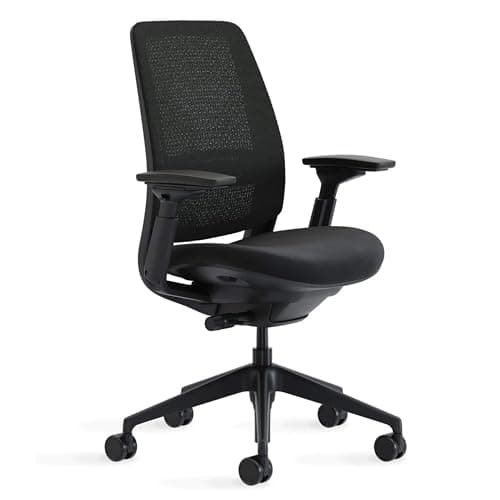
Buy a task chair if your chair is mainly a work chair. You get more adjustment axes, a seat you can move around on, a surface that does not trap heat, and typically twice the warranty. This is the right answer for most desks, and the full field is in the ergonomic office chair roundup.
Buy a gaming chair if you genuinely recline for hours, you want a headrest, and you have decided the heat is an acceptable trade. If you do, buy one with an integratedadjustable lumbar rather than a strap-on pillow, and check whether the maker offers frame sizes — a bolstered seat that is the wrong width is worse than a flat seat that is.
Buy the middle if what attracted you to a gaming chair was the headrest and the recline rather than the styling. A mesh task chair with a 3D headrest and a locking recline gives you both without the leatherette, and it costs less than either flagship on this page.
Whichever you choose, the setup matters as much as the purchase. Set the seat height first and everything else relative to it — how to adjust an office chair has the order — and if your feet do not reach the floor once the seat is at the right height for your desk, a footrest is the fix rather than lowering the chair.