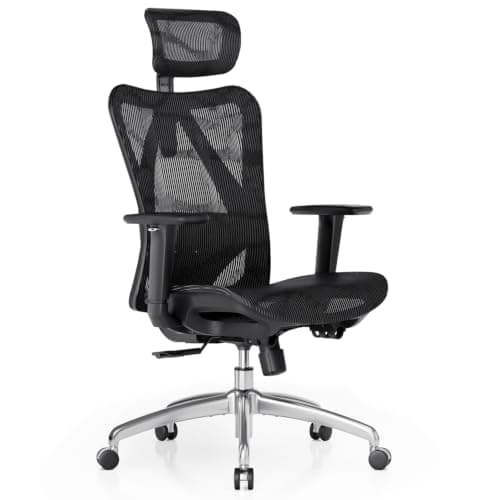
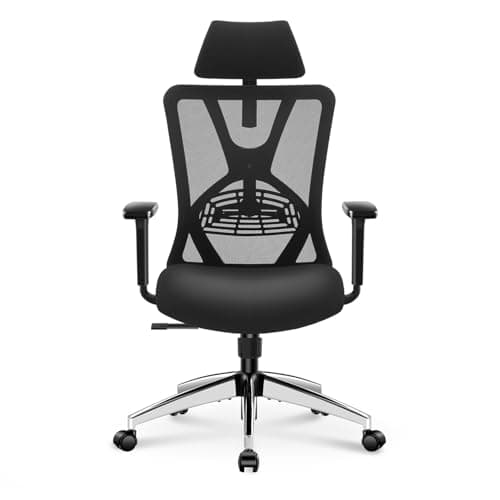
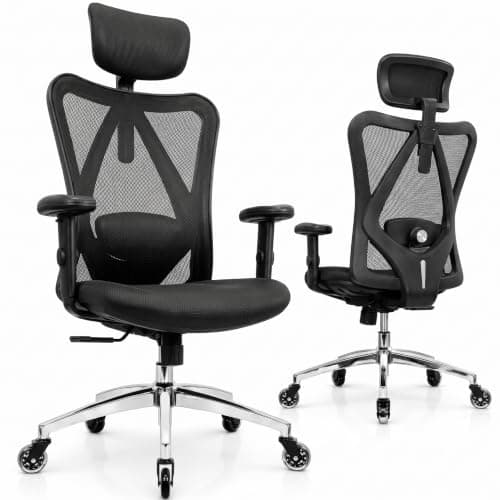
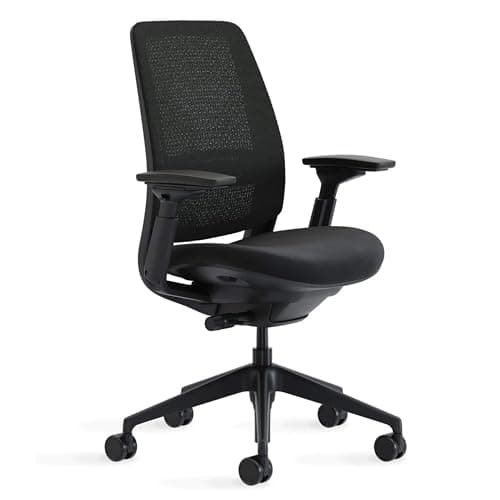
Before anything else: a chair is not a treatment. Persistent or worsening back pain, pain that radiates down a leg, or numbness are things to take to a clinician, not to a shopping list. What a chair can genuinely do is stop making an ordinary, mechanical, sitting-all-day ache worse — and the feature that does that is not a thicker cushion or a taller backrest. It is a lumbar support you can move to where your lower back curve actually is.
Why lumbar adjustment is the whole ranking
Sitting flattens the natural inward curve of the lower spine. A backrest with a fixed bump in it assumes your curve sits at the same height as the designer’s, and for a lot of people it does not — the support lands on the mid-back, which does nothing, or below the belt line, which is worse than nothing. Two adjustments fix that. Height moves the support up and down to meet your curve. Depth sets how far it protrudes, which is how firm it feels. A chair with both is adjustable to your body; a chair with neither is adjustable to nobody.
This is why the value picks on this page score so well on lumbar fit and so ordinarily on build. Two-axis lumbar adjustment is genuinely more useful for a sore back than a better frame around a fixed one. It is also why the ranking here differs from the general ergonomic chairs roundup, where overall build and longevity carry more weight.
Seat depth is the second adjustment, and it is invisible
A seat that is too long presses into the back of your knees, which people relieve by sliding forward — and once you slide forward, your lower back leaves the lumbar support entirely. That is the most common way a good chair gets used badly. The check is simple: sit all the way back, and you should be able to fit roughly two to three fingers between the front edge of the seat and the back of your knee. If you cannot, you need a seat-depth slide, and most chairs under a few hundred dollars do not have one.
If a slide is not available, the workaround is a firm cushion behind your lower back to effectively shorten the seat, which is a compromise rather than a fix. Anyone notably tall or short should treat seat depth as a hard requirement rather than a nice-to-have.
Recline is the underrated one
Leaning back transfers some of your upper body weight to the backrest instead of your lumbar spine, which is why a chair with a real recline and a lock is more useful than a chair fixed upright. The useful pattern is not one perfect posture held rigidly for eight hours; it is changing position several times a day. A recline that locks at a few angles lets you do that deliberately. A recline with only tension and no lock tends to get set tight and never used.
The three things that matter as much as the chair
- Desk height.A desk set too high raises your shoulders and the compensating posture lands in your back. If your elbows are not near 90 degrees with your shoulders relaxed, the chair cannot fix it — see how high should your desk be.
- Feet on the floor. Dangling legs pull you forward off the backrest. If raising the chair to reach the desk leaves your feet unsupported, you need a footrest, not a different chair.
- Monitor height. A screen below eye level bends your neck forward, and the rest of your spine follows it into a slouch that no lumbar support can hold you out of. The measurement is in the monitor height guide.
How this list is ranked
Lumbar fit carries the most weight, then overall support, then adjustability, then build. The scores are judgments from published manufacturer specifications, ergonomics guidance from OSHA and NIOSH, and aggregated owner reports — not clinical evidence and not measurements from a lab we do not have. See how we pick. Once the chair is chosen, setting it up correctly matters more than most people expect; the sequence is in how to adjust an office chair.
Neck pain is a different problem from lower-back pain, and it needs the head supported rather than the lumbar curve filled — the headrest chair roundup covers that case.
How to choose a chair when your back hurts
Work down a short list of requirements rather than a long list of features. Lumbar support that adjusts by height at minimum, and by depth if you can get it. A seat-depth slide if you are notably tall or short. Armrests that adjust in height, so your shoulders are not holding your arms up all day. A recline that locks. And a seat firm enough that it does not collapse into a hammock in a year, because a collapsed seat tips your pelvis back and undoes everything else.
Then set it in the right order once it arrives, because a well-chosen chair set wrong is a badly set chair: seat height first, from your elbows and the desk; then seat depth; then lumbar height against your actual curve; then armrests to meet your elbows; then recline tension last. That sequence is walked through step by step in how to adjust an office chair.
A note on the used market, because it is genuinely relevant here: a second-hand premium chair often beats a new budget one at the same money, because the frames and mechanisms on the top-tier brands outlast their upholstery by years. The trade is that you inherit whatever condition the gas lift and the foam are in, and you cannot return it. If the budget is tight and the back is the reason, that trade is usually worth considering — see the budget chairs roundup for what the money buys new.