Buy a chair rated for at least about 1.3 times your body weight, and treat the rating as a proxy for build quality rather than as a limit you are testing. Published figures on the chairs we rank run from 250 lb on a budget mesh chair to 450 lbon a big-and-tall executive, and the practical advice for anyone near the top of a chair’s range is to move up a tier — not because the chair will break, but because the parts that wear will wear faster.
The other half of the answer, and the one that gets missed: capacity and fit are different specifications. A chair rated to 400 lb with a 19-inch seat does not fit a 350 lb person comfortably. Check the published seat width and seat depth alongside the rating, every time.
What the published rating actually is
It is a manufacturer’s static load figure for the chair as a system, and it traces back to the office furniture test standards maintained by BIFMA, the industry body that publishes the seating standards most contract chairs cite. What a listing almost never tells you is whichtest the number came from, so treat two chairs’ ratings as comparable in spirit rather than in method.
A few things the rating does not cover:
- Impact. Dropping into a chair applies a multiple of your static weight for a fraction of a second. This is the load that cracks a nylon base.
- Point loading. Sitting on the front edge, or on one side while you reach for something, concentrates the load on one part of the seat plate and one arm of the base.
- Leaning back hard. A deep recline shifts the load behind the cylinder and onto the back frame and tilt mechanism, which is the junction that develops play first.
- Years. The figure is for a new chair. Foam, mesh and gas seals all soften with use, and how long office chairs last goes through each one.
Which part gives up first
In our reading of how these chairs fail, roughly in this order:
1. The gas cylinder. A lift running near its rated load works harder, and a worn seal is why a chair starts sinking under you. That is the single most common failure of any office chair and it is covered in detail in the sinking chair guide.
2. The base. Five-star bases are nylon on most chairs and aluminum or steel on the better ones. Nylon is adequate at the rating and unforgiving of impact; a metal base is the single clearest signal that a chair was designed for a heavier user.
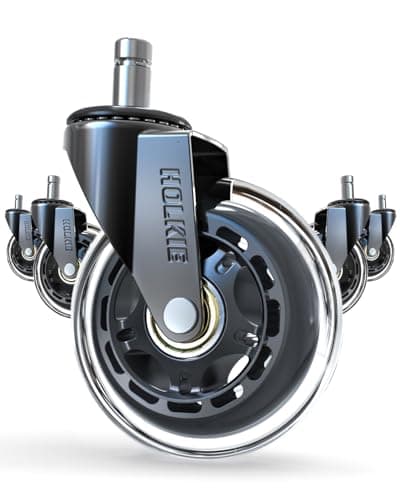
3. The casters and their sockets.Small, hard wheels under a high load are a wear item, and the sockets in a nylon base widen over time. Larger soft casters spread the load and roll better — see the caster and floor guide.
4. The seat plate and tilt mechanism. Last to fail, and the most expensive, which is why a long mechanism warranty is worth real money.
Published capacities for the chairs we rank
| Chair | Published capacity | Notes |
|---|
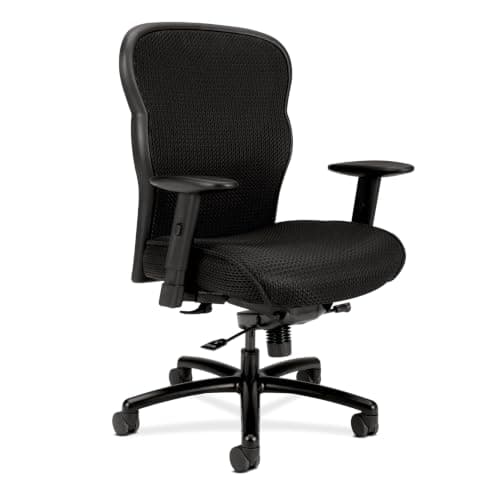
| HON Wave Big and Tall | 450 lb | 21.63 in seat width; 19.25 to 22.25 in seat height |
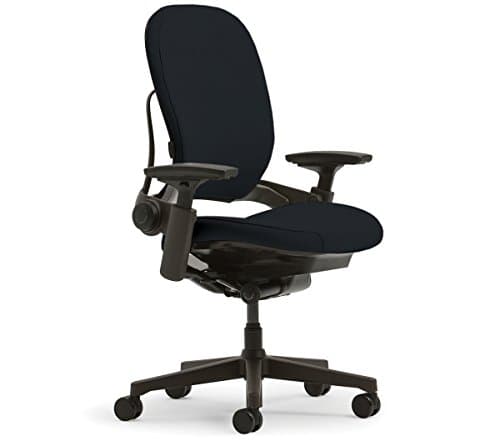
| Steelcase Leap V2 | 400 lb | 12-year warranty covering the whole chair |
| Steelcase Series 2 | 400 lb | 12-year mechanism warranty |
| Serta Big and Tall | 350 lb | 22.5 in seat width, padded rather than mesh |
| Amazon Basics Big and Tall | 350 lb | The budget entry into the category |
| SIHOO M57 | 330 lb | Mid-market mesh with dual-adjustable lumbar |
| Hbada J3 | 250 lb | Budget mesh; the lowest rating we rank |
Two patterns in that table are worth noticing. First, the premium contract chairs and the big-and-tall chairs arrive at similar numbers from opposite directions — one through engineering margin, the other through size. Second, every chair under about 300 lb in our rankings is a budget chair, which tells you the rating is doing double duty as a quality signal.
Fit is a separate question from capacity
Three measurements decide comfort, and only one of them is the rating:
Seat width. You want clear space either side of your hips. The HON Wave publishes 21.63 inches and the Serta 22.5; a standard task chair is usually nearer 19 to 20.
Seat depth. Two to three fingers of gap between the seat edge and the back of your knee. Adjustable depth, which the Leap V2 has, is the feature that makes one chair fit two people.
Seat height.Feet flat, thighs level. Big-and-tall chairs often start high — the HON Wave’s range begins at 19.25 inches, which is too tall for a shorter user whatever the capacity says. All three are worked through in the chair sizing guide.
If you are both tall and heavy, the taller dimension is usually the harder one to satisfy, and our roundup of chairs for tall people ranks on back height and seat height rather than on load.
Practical rules
Add 30% to your weight and shop above that. Margin is what keeps the cylinder and base out of their worst operating range.
Prefer a metal base over a nylon one if you are over about 250 lb. It is the cheapest structural difference to spot on a listing and the most meaningful.
Read the warranty, not just the rating.A 12-year mechanism warranty is a manufacturer putting money behind its own number; “rated to 400 lb” with a one-year warranty is not.
Do not use a drafting stool as a heavy-duty chair.Tall cylinders and footrings add leverage, and the ratings are usually lower — office chair vs drafting chair covers the difference.