Skip to content
Chair & Cable

SECTION 04 · Keyboards & Mice

The Best Wrist Rests

A wrist rest is a palm rest. Use it wrong and it does nothing; match its height to your keyboard and rest the heel of your hand on it, and it takes real load off your forearms.

By Stephen V.Updated How we pick
#ad

We earn a commission when you buy through our Amazon links, at no extra cost to you. It never affects our rankings, and we say so when the cheaper product is the better buy. How this works.

The most important thing about a wrist rest is that it is not a wrist rest. Resting the joint itself on a pad while you type compresses the underside of the wrist and holds it in extension, which is the opposite of what you want. What it is for is supporting the heel of your palm during the pauses between typing, so your forearms are not held up by your shoulders all day. Get that distinction right and a rest genuinely helps. Get it wrong and it is, at best, doing nothing.

Height match is the spec that decides everything

A wrist rest should bring the heel of your hand up to roughly the height of the space bar, so your wrist stays straight rather than angled up or down. That means the correct thickness is determined by your keyboard, not by comfort preference. A tall mechanical board with full-height switches typically wants something around one inch or 20mm. A low-profile board or a laptop keyboard wants something much thinner, often under half an inch — and a one-inch rest in front of a low-profile board actively angles your wrists upward, which is worse than no rest at all.

The check takes ten seconds. Put your hands in typing position, then look at your forearm and hand from the side. They should form a straight line. If your hand tips up or down where it meets the rest, the height is wrong.

Firm or soft, and why firm often wins

Intuitively, softer sounds better. In practice a very soft rest lets the heel of the palm sink into it, which drops the hand and bends the wrist upward — the exact position you were trying to avoid. A firmer surface holds the palm at a consistent height. That is the entire argument for the wooden rest on this page, and it is why medium firmness rather than plush wins the foam and gel comparison too.

Gel and memory foam differ in how they age rather than how they feel on day one. Gel conforms and springs back more or less indefinitely. Memory foam molds beautifully and then gradually takes a permanent set, at which point the height it was chosen for is no longer the height it delivers. If you want one purchase to last, gel or wood is the safer bet.

The mouse hand needs one more than the typing hand

Mousing is usually the more extended posture of the two: the hand sits on top of the device with the wrist bent back, and it stays there for hours in a way typing does not. A small rest at the base of the mouse pad closes that angle. The caveat is that anchoring the wrist encourages pivoting from the wrist rather than moving from the elbow and shoulder, which is a worse movement pattern — so if you already mouse with big arm movements on a large mat, do not introduce an anchor. If your mouse hand is the one that hurts, a vertical mouse or a trackball addresses the cause rather than the symptom.

Fix these first, because a rest cannot compensate for them

  • The keyboard feet. Almost everyone flips them up. Doing so tilts the board toward you and forces your wrists into extension. Put them down.
  • Desk height.If your elbows are not near 90 degrees with your shoulders relaxed, your wrist angle is a symptom — see how high should your desk be.
  • Board width. A full-size keyboard pushes your mouse out to the right and rotates your shoulder. A tenkeyless board fixes it for free.
  • Board shape.If your wrists deviate outward toward the number pad, no rest will help — that is what an ergonomic keyboard is for.

How this list is ranked

Height match first, because a rest at the wrong height is worse than none; then support quality, then durability, then value. Dimensions and materials come from the manufacturers’ published specifications, and the positioning guidance follows OSHA workstation material rather than measurements from a lab we do not have — see how we pick. A large desk mat under both the keyboard and the rest keeps everything from creeping across the desk.

The short answer

Quick picks

#ProductBest forScorePrice
01
Glorious Glorious Padded Keyboard Wrist Rest (Full Size, 1" Thick)
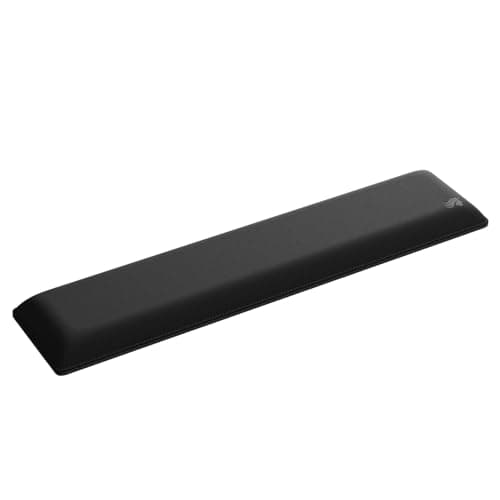
Glorious Padded Keyboard Wrist Rest (Full Size, 1" Thick)

One inch of medium-firm padding is the height that actually matches a tall mechanical keyboard, and stitched edges mean it survives being pushed around a desk for years. The default recommendation.

Best overall
8.9
$39.47Amazon
02
3M 3M Gel Wrist Rest for Keyboards (WR85B)
3M Gel Wrist Rest for Keyboards (WR85B)

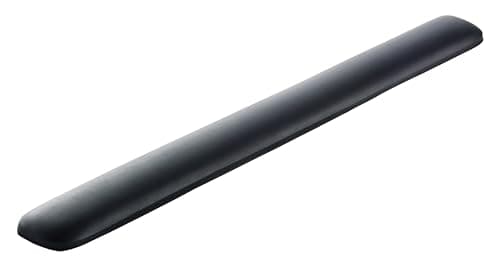
Gel rather than foam, which means it conforms under the heel of your hand and springs back rather than compressing permanently. The 19-inch length covers a full-size board.

Best gel and best for full-size boards
8.8
$25.95Amazon
03
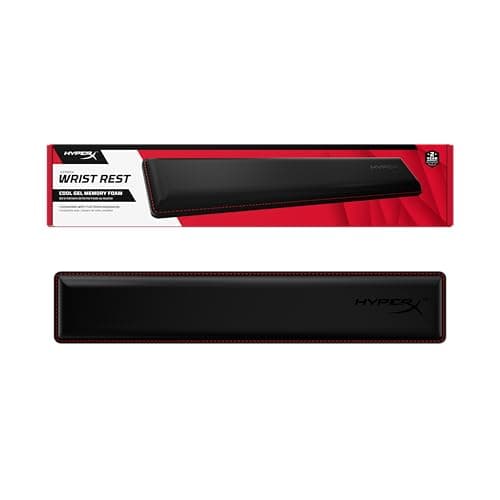
HyperX HyperX Wrist Rest (Full Sized, Cooling Gel and Memory Foam)
HyperX Wrist Rest (Full Sized, Cooling Gel and Memory Foam)

Memory foam for the shape, a cooling gel layer for the temperature. It is the answer if a foam rest gets uncomfortably warm under your hands over a long session.

Best for warm hands
8.5
$22.99Amazon
04
No image
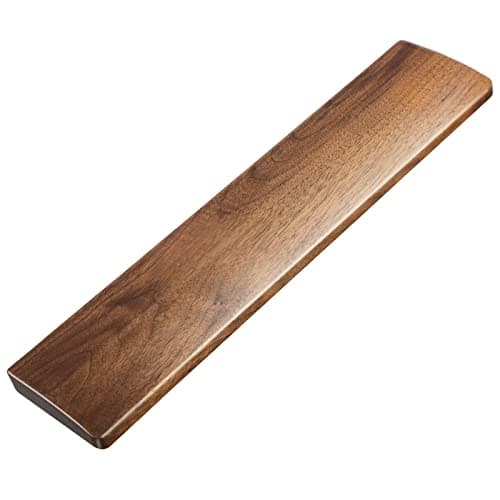
Faluber Wooden Wrist Rest (17.3 in, Walnut)

A hard rest, which sounds wrong and is a deliberate choice. A firm surface stops the palm sinking and keeps the wrist straighter than soft foam does, and 20mm is a good height match for a mechanical board.

Best firm rest
9.0
Check price →
05
Kensington Kensington Duo Gel Mouse Pad with Wrist Rest
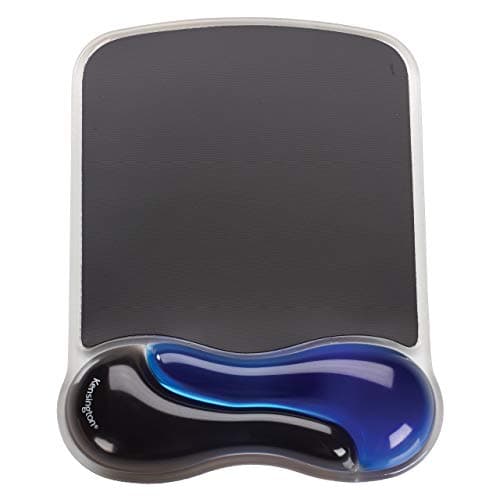
Kensington Duo Gel Mouse Pad with Wrist Rest

The mouse-side answer, which most people forget exists. Mousing loads the wrist differently from typing, and a small gel rest at the base of the pad is the cheapest fix there is.

Best for the mouse hand
8.6
$17.95Amazon

#ad · Live prices from the Amazon Product API, as of Sep 6, 2026. Where we have no verified live price we show none — we would rather leave a gap than print a number that has rotted.

In detail

The picks, in full

01
Glorious Glorious Padded Keyboard Wrist Rest (Full Size, 1" Thick)

Best overall

Glorious Padded Keyboard Wrist Rest (Full Size, 1" Thick)

Dimensions
18" x 4" x 1"
Firmness
Medium
Surface
Smooth cloth
Base
Anti-slip rubber
Edges
Anti-fray stitched
8.9/10

One inch of medium-firm padding is the height that actually matches a tall mechanical keyboard, and stitched edges mean it survives being pushed around a desk for years. The default recommendation.

Height Match
9.2
Support
9
Durability
9
Value
8.4

Pros

  • A full inch of height is the right match for a tall mechanical board, where thin rests fall short
  • Medium firmness supports the palm without letting it sink and bend the wrist
  • Stitched edges are the difference between a rest that lasts and one that frays in a year
  • Rubber base means it stays where you put it instead of creeping forward

Cons

  • Cloth surface picks up hand oils and eventually needs washing
  • 18 inches suits tenkeyless boards; a full-size board is wider than this
  • One inch is too tall for a low-profile keyboard

Skip this if…

your keyboard is low profile - a 1-inch rest will angle your wrists upward instead of level

$39.47View on Amazon

Price as of Sep 6, 2026. Prices change — Amazon's is the one that counts.

#ad · we may earn a commission from this link to Glorious Padded Keyboard Wrist Rest (Full Size, 1" Thick)

02
3M 3M Gel Wrist Rest for Keyboards (WR85B)

Best gel and best for full-size boards

3M Gel Wrist Rest for Keyboards (WR85B)

Length
19"
Fill
3M gel
Cover
Satin smooth, wipe clean
Color
Black
Use
Full-width keyboard palm support
8.8/10

Gel rather than foam, which means it conforms under the heel of your hand and springs back rather than compressing permanently. The 19-inch length covers a full-size board.

Height Match
8.4
Support
8.8
Durability
9.2
Value
8.6

Pros

  • Gel conforms to the hand and recovers, where foam takes a permanent dent over time
  • 19 inches covers a full-size keyboard including the number pad
  • Wipe-clean cover rather than cloth, which matters if you eat at your desk
  • The most established product here, with a long track record

Cons

  • Gel feels cool and slightly clammy to some people, particularly in a cold room
  • Lower profile than the Glorious, so it undershoots a very tall board
  • Plain, functional appearance

Skip this if…

you dislike the feel of gel - it is a genuinely divisive material and no spec will change that

$25.95View on Amazon

Price as of Sep 6, 2026. Prices change — Amazon's is the one that counts.

#ad · we may earn a commission from this link to 3M Gel Wrist Rest for Keyboards (WR85B)

03
HyperX HyperX Wrist Rest (Full Sized, Cooling Gel and Memory Foam)

Best for warm hands

HyperX Wrist Rest (Full Sized, Cooling Gel and Memory Foam)

Size
Full sized
Fill
Memory foam with a cooling gel layer
Base
Anti-slip
Surface
Fabric cover
8.5/10

Memory foam for the shape, a cooling gel layer for the temperature. It is the answer if a foam rest gets uncomfortably warm under your hands over a long session.

Height Match
8.6
Support
8.4
Durability
7.8
Value
9

Pros

  • Cooling gel layer addresses the one real complaint about memory foam rests
  • Memory foam molds to the individual hand rather than presenting a uniform surface
  • Anti-slip base keeps it in position under pressure
  • Full-size length covers a standard keyboard

Cons

  • Memory foam softens and takes a set faster than gel does
  • The cooling effect is noticeable at first and less so once the material warms
  • Fabric cover needs periodic cleaning

Skip this if…

you want a firm, unchanging surface - memory foam is designed to sink under your hand

$22.99View on Amazon

Price as of Sep 6, 2026. Prices change — Amazon's is the one that counts.

#ad · we may earn a commission from this link to HyperX Wrist Rest (Full Sized, Cooling Gel and Memory Foam)

04
No image

Best firm rest

Faluber Wooden Wrist Rest (17.3 in, Walnut)

Length
17.3" (440mm)
Thickness
20mm
Material
Walnut wood
Surface
Sealed, wipe clean
Fit
Sized for a full-sized mechanical keyboard
9.0/10

A hard rest, which sounds wrong and is a deliberate choice. A firm surface stops the palm sinking and keeps the wrist straighter than soft foam does, and 20mm is a good height match for a mechanical board.

Height Match
8.8
Support
8.6
Durability
9.8
Value
8.6

Pros

  • A firm surface keeps the wrist straighter, because the palm does not sink into it
  • 20mm thickness matches the height of most full-height mechanical boards
  • Wipes clean and will not absorb hand oils, compress, or fray
  • Will outlast every foam and gel rest here by years

Cons

  • Hard against the hand, which some people find uncomfortable regardless of the ergonomics
  • No give at all if the height is even slightly wrong for your board
  • Wood can slide on a smooth desk without a mat under it

Skip this if…

you want cushioning - this is a firm platform and it is not trying to be soft

Check price on Amazon →

We don't have a verified live price for this right now, so we aren't showing one.

#ad · we may earn a commission from this link to Faluber Wooden Wrist Rest (17.3 in, Walnut)

05
Kensington Kensington Duo Gel Mouse Pad with Wrist Rest

Best for the mouse hand

Kensington Duo Gel Mouse Pad with Wrist Rest

Dimensions
9.6" x 7.6"
Fill
Gel wrist support
Type
Mouse pad with integrated wrist rest
Base
Non-skid
8.6/10

The mouse-side answer, which most people forget exists. Mousing loads the wrist differently from typing, and a small gel rest at the base of the pad is the cheapest fix there is.

Height Match
8.2
Support
8
Durability
8.6
Value
9.4

Pros

  • Covers the mouse hand, which typically gets more wrist extension than the typing hand
  • Gel support integrated into the pad, so there is no gap or step between them
  • Non-skid base keeps the whole thing stationary during fast movements
  • Costs almost nothing relative to the discomfort it addresses

Cons

  • The pad area is small if you mouse at low sensitivity with big sweeps
  • Fixed height, so it cannot be matched to an unusual desk setup
  • A wrist rest under the mouse encourages pivoting from the wrist rather than moving the arm

Skip this if…

you move the mouse from the shoulder across a large mat - a wrist anchor works against that

$17.95View on Amazon

Price as of Sep 6, 2026. Prices change — Amazon's is the one that counts.

#ad · we may earn a commission from this link to Kensington Duo Gel Mouse Pad with Wrist Rest

How to choose a wrist rest

Measure your keyboard first. Put a ruler beside it and measure from the desk to the top of the space bar — that is the height you are matching. A full-height mechanical board is usually around an inch; a low-profile board is often half that. Then pick a length that matches your board: 17 to 18 inches suits a tenkeyless, 19 inches or more suits a full-size.

Then choose material by how you want it to age. Wood and gel hold their height for years. Memory foam is the most comfortable on arrival and the first to lose its shape. Cloth covers feel better and need washing; sealed covers wipe clean and do not.

Use it correctly once it arrives: the rest supports your palms in the pauses, and your hands float above the keys while you actually type. If you find yourself pressing your wrists into it constantly while typing, the keyboard is probably too far forward on the desk, which pulls you off your chair backrest as well. The positioning that fixes both is in keyboard and mouse ergonomics.
How we picked

We do not run a testing lab

We compiled the published manufacturer specifications, did the ergonomics, VESA and desk-depth math ourselves, and read aggregated owner reviews, then scored each product against a published rubric. The scores are judgments from documented research — they are not measurements we took, because we do not have a lab and we are not going to pretend we do. Every spec traces back to a listing or manual named in Sources.

Questions

Frequently asked

Are wrist rests actually good for you?
Used correctly, yes — they support the heel of your palm during pauses so your shoulders are not holding your forearms up all day. Used incorrectly, by resting the wrist joint itself on the pad while typing, they hold the wrist in extension and can make discomfort worse. The device is a palm rest; the name is misleading.
How thick should a wrist rest be?
Thick enough to bring the heel of your hand level with the top of the space bar, which means it depends on your keyboard. A full-height mechanical board usually wants about one inch or 20mm; a low-profile board or laptop keyboard wants under half an inch. Check from the side: your forearm and hand should form a straight line.
Gel, memory foam, or wood?
Gel conforms and recovers indefinitely, which makes it the safest long-term choice. Memory foam is the most comfortable on day one and gradually takes a permanent set, losing the height you chose it for. Wood is firm, which keeps the palm from sinking and the wrist straighter, and it lasts effectively forever — but it is genuinely hard against the hand.
Do I need a wrist rest for my mouse as well?
Often more than for the keyboard, because mousing holds the wrist in extension for long continuous periods. The caveat is that anchoring your wrist encourages pivoting from the joint rather than moving from the elbow, so it suits people who already mouse in a small area. If the mouse hand is the problem, a vertical mouse or trackball treats the cause.
Will a wrist rest fix wrist pain?
It can reduce a mild ache from unsupported forearms, but it does not address the two usual causes: a keyboard tilted toward you on its feet, and a desk at the wrong height. Fix both of those first — they are free. Persistent pain, tingling, or numbness needs a clinician, not an accessory.

Keep reading

Receipts

Sources

We do not run a testing lab, and we do not pretend to. Specifications come from the manufacturer or retailer listing; the footprint and clearance math is ours and reproducible. Where we could not verify a number, we say so on the page rather than quietly leaving it out. Read our full method.