Cable management is the last ten percent of a desk build, and it is the part that decides whether a pile of good gear reads as one deliberate setup or a nest of black spaghetti. The good news is that the whole job comes down to four moves you do once: consolidate power to a single feed, hide the strip and the power bricks, route the runs through a tray or raceway, and bundle what is left with reusable ties. Do it properly and you never think about it again.
Start with power, because a tangle of separate cords each reaching its own outlet is what makes the floor look chaotic. Put one surge-protected strip in a single spot and run just that one cord to the wall, then plug every adapter into it so no brick dangles in mid-air. The single most satisfying piece here is a lidded cable box: it swallows the strip and the coil of excess cable and turns the ugliest part of the setup into a closed shape you never see. Our winner, the D-Line box, exists to do exactly that one job, which is why it leads the list even though it is the simplest thing on it.
With power consolidated, the next question is how the remaining runs get from the desktop to the floor without hanging in the open. A tray mounted under the desk holds the mass of slack out of sight from any normal sitting angle; a raceway covers the vertical run down a leg or along a wall; and an on-wall cord concealer hides a single visible cable — a monitor or TV feed — against paintable channel you can match to the wall. Which combination you need depends on whether the outlet sits behind the desk or across the room, so read each piece’s mounting notes before you buy rather than assuming one part does everything.
Whatever is left, bundle it — but with reusable hook-and-loop straps, not zip ties, so swapping one cable later does not mean cutting the whole harness apart. And if you run a sit-stand desk, leave deliberate slack: every cable from the desktop to the wall gets longer as the desk rises, and a bundle managed tight while the desk is low will pull taut at the top of its travel. The full step-by-step lives in our guide to managing cables under a desk; if a single dock could erase half your cables before you manage anything, start with the best USB-C docks for dual monitors; and how we pick explains how these picks are ranked.
The short answer
Quick picks
| # | Product | Best for | Score | Price |
|---|
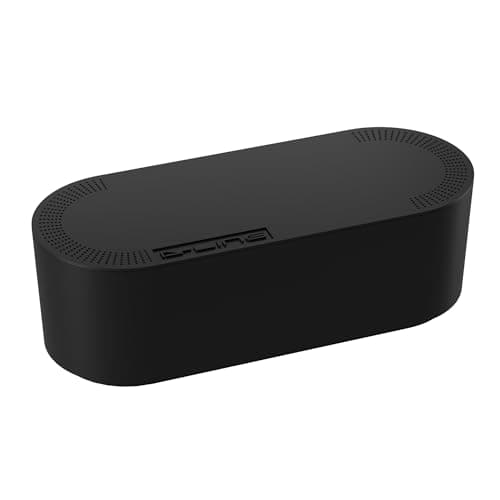
| 01 | D-Line Cable Management Box (Large)The most satisfying single piece in any cable cleanup. It swallows the power strip and the coil of excess cable and turns the ugliest part of the desk into a closed box you never look at. | Hiding the power strip | | $27.99·Amazon |
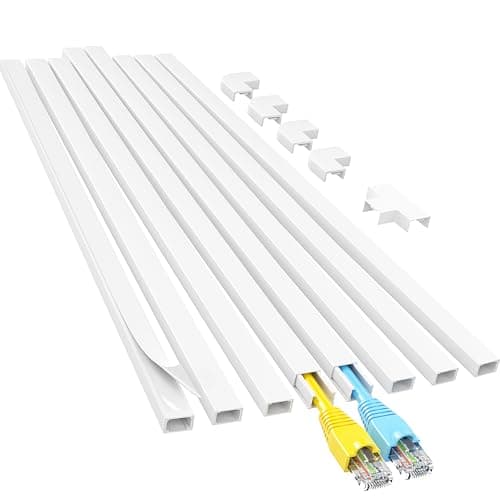
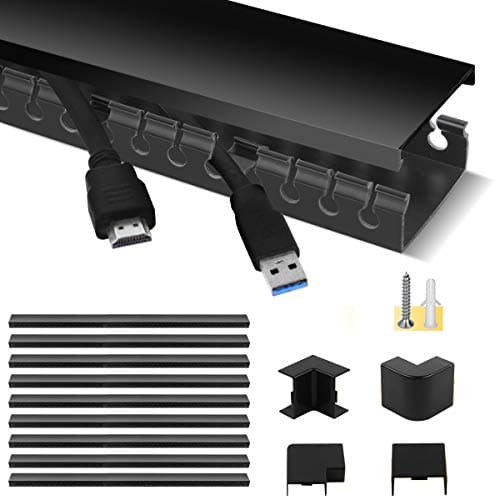
| 02 | Stageek Cable Raceway KitA paintable channel kit for running cables cleanly along a wall or desk leg. The corner and joint pieces let you turn tidy corners instead of taping a cable to the baseboard. | Wall & leg raceway runs | | $21.99·Amazon |
| 03 | Yecaye One-Cord Cable ConcealerPurpose-built for the single visible cable — a wall-mounted TV or monitor feed — that a box cannot help with. It hides one run against paintable channel and nothing more. | One cord on a wall | | $7.98·Amazon |
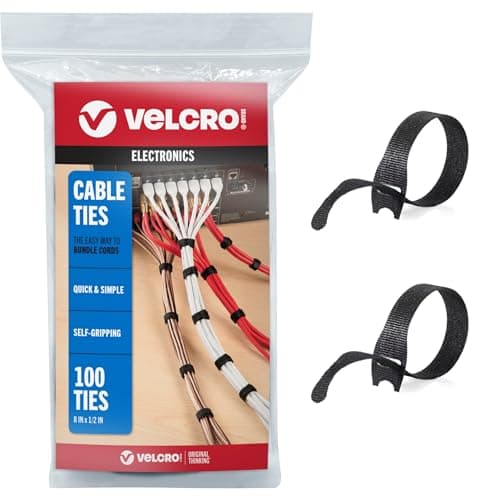
| 04 | VELCRO Brand ONE-WRAP Cable Ties (100-pack)The reusable strap that should replace every zip tie behind your desk. It cinches just as neatly but opens in a second, so swapping one cable never means cutting the whole bundle apart. | Reusable bundling | | $15.88·Amazon |
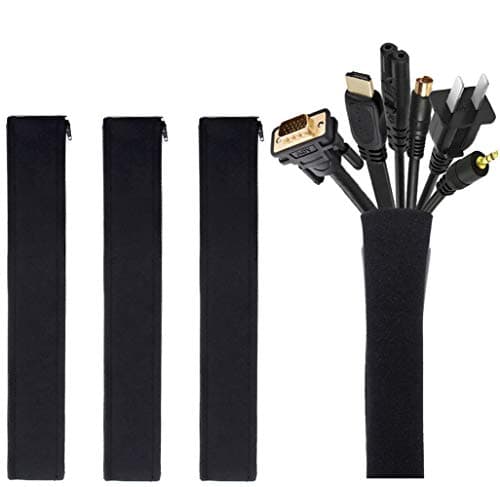
| 05 | JOTO Cable Management Sleeve (4-pack)A wrap-around neoprene sleeve that gathers a fistful of loose cables into one clean tube. The hook-and-loop seam runs the whole length, so you can open it to add a cable later. | Sleeving a cable bundle | | $9.99·Amazon |
#ad · Live prices from the Amazon Product API, as of Jul 24, 2026. Where we have no verified live price we show none — we would rather leave a gap than print a number that has rotted.
In detail
The picks, in full
Hiding the power strip
D-Line Cable Management Box (Large)
- Type
- Lidded cable-management box
- Material
- Fire-retardant ABS plastic
- Holds
- Surge-protected power strip plus excess cable
- Cable exits
- Slotted openings at both ends
- Placement
- Freestanding on floor or desk
The most satisfying single piece in any cable cleanup. It swallows the power strip and the coil of excess cable and turns the ugliest part of the desk into a closed box you never look at.
- Concealment
- 9.2
- Capacity
- 9
- Install ease
- 9.4
- Reconfigurability
- 8.8
Pros
- +Hides a whole power strip and its bricks in one closed shape
- +Fire-retardant plastic is the right material for concentrated power
- +No mounting or drilling — it just sits where you put it
- +Lid lifts off for quick changes to what is plugged in
Cons
- −Only manages the pooled cable at the outlet, not the runs across the desk
- −The large size still has a footprint you need to place out of sight
Skip this if…
…you need to route long cable runs along a wall or desk edge — a box hides the pool, not the path
Wall & leg raceway runs
Stageek Cable Raceway Kit
- Type
- Paintable channel raceway kit
- Material
- PVC
- Mount
- Self-adhesive backing
- Contents
- Straight channels plus corner and joint pieces
- Finish
- Paintable to match wall or trim
A paintable channel kit for running cables cleanly along a wall or desk leg. The corner and joint pieces let you turn tidy corners instead of taping a cable to the baseboard.
- Concealment
- 9
- Capacity
- 8.4
- Install ease
- 8
- Reconfigurability
- 9
Pros
- +Kit includes corners and joints for real routing, not just straight runs
- +Paintable surface disappears against a matching wall
- +Adhesive backing means no drilling for most installs
Cons
- −Adhesive holds best on smooth, clean surfaces — textured walls are hit or miss
- −Cutting the channels to length is fiddly the first time
Skip this if…
…your cables never leave the desk area — a raceway earns its keep on visible wall or floor runs
One cord on a wall
Yecaye One-Cord Cable Concealer
- Type
- On-wall single-cord concealer
- Material
- PVC
- Mount
- Self-adhesive backing
- Best use
- Hiding one visible run on a wall
- Finish
- Paintable
Purpose-built for the single visible cable — a wall-mounted TV or monitor feed — that a box cannot help with. It hides one run against paintable channel and nothing more.
- Concealment
- 8.8
- Capacity
- 7
- Install ease
- 8.8
- Reconfigurability
- 9
Pros
- +Cleanest fix for a single lonely cable on an open wall
- +Paintable channel blends into the wall color
- +Simple peel-and-stick install with no tools
Cons
- −Built for one cord; not meant for a thick bundle
- −Adhesive is only as good as the wall surface under it
Skip this if…
…you are trying to corral a fat bundle of cables — this is a one-cord channel by design
Reusable bundling
VELCRO Brand ONE-WRAP Cable Ties (100-pack)
- Type
- Reusable hook-and-loop cable ties
- Material
- Nylon hook-and-loop
- Quantity
- 100 pre-cut ties
- Reusable
- Open and re-cinch without cutting
- Use
- Bundling and grouping cable runs
The reusable strap that should replace every zip tie behind your desk. It cinches just as neatly but opens in a second, so swapping one cable never means cutting the whole bundle apart.
- Concealment
- 6.6
- Capacity
- 8.2
- Install ease
- 9.4
- Reconfigurability
- 9
Pros
- +Open and re-cinch endlessly — swap one cable without redoing the bundle
- +Will not pinch a cable the way an overtightened zip tie can
- +A 100-pack outlasts several desk rebuilds
Cons
- −Bundles cables; does not hide them from view on its own
- −Less low-profile than a flush zip tie inside a tight channel
Skip this if…
…you want the cables concealed, not just gathered — ties tidy a bundle but leave it visible
Sleeving a cable bundle
JOTO Cable Management Sleeve (4-pack)
- Type
- Wrap-around cable sleeve
- Material
- Neoprene
- Closure
- Hook-and-loop seam along the length
- Quantity
- 4 sleeves
- Use
- Gathering multiple cables into one tube
A wrap-around neoprene sleeve that gathers a fistful of loose cables into one clean tube. The hook-and-loop seam runs the whole length, so you can open it to add a cable later.
- Concealment
- 8.4
- Capacity
- 8
- Install ease
- 8.6
- Reconfigurability
- 7.8
Pros
- +Turns a fan of cables into one tidy tube in seconds
- +Full-length seam opens to add or remove a cable any time
- +Cut-to-length and comes as a four-pack for multiple runs
Cons
- −Best for the visible drop between desk and floor, not the whole under-desk mass
- −A thick bundle can strain the seam at the fullest point
Skip this if…
…your cables are already hidden in a tray — a sleeve shines on the one run people still see
How to choose under-desk cable management
There is no single product that does the whole job, so the first step is to match the piece to the problem in front of you. A box hides the pool of cable and the power strip at the outlet. A raceway or cord concealer hides the visible run along a wall or down a desk leg. Reusable ties and a sleeve gather the loose bundle so it looks intentional rather than accidental. Most desks want two or three of these, not one.
The next thing to check is how each piece mounts. A box is freestanding and needs no tools, which makes it the easy win. A raceway or concealer usually relies on adhesive backing, and adhesive is only as reliable as the surface under it — smooth painted drywall holds, heavy texture and brick do not, and those runs may want screws instead. Confirm the mounting method fits your wall before you commit to a peel-and-stick channel.
Do the job in order: power first, then routing, then bundling. Put one surge-protected strip on a tray or in a box so a single cord leaves the desk, route each device down to it, then strap the runs with hook-and-loop rather than zip ties so a future swap takes seconds. If your desk raises and lowers, leave a deliberate loop of slack in every run and route it so the loop can open and close freely, because a cable managed tight while the desk is low will strain at full height. Finally, favor fire-retardant plastic anywhere power is concentrated — it is the right material for a box full of adapters, and it costs nothing extra to choose it.
How we picked
We do not run a testing lab
We compiled the published manufacturer specifications, did the ergonomics, VESA and desk-depth math ourselves, and read aggregated owner reviews, then scored each product against a published rubric. The scores are judgments from documented research — they are not measurements we took, because we do not have a lab and we are not going to pretend we do. Every spec traces back to a listing or manual named in Sources.
Questions
Frequently asked
What is the best way to hide a power strip under a desk?+
A lidded cable-management box is the cleanest fix. It holds the strip and the coil of excess cable inside a closed shape, so the messiest part of the setup — a strip with a dozen bricks hanging off it — disappears. Run a single cord from the box to the wall and plug everything else into the strip inside.
Do I need a cable tray, a box, or a raceway?+
They solve different problems, so many desks want more than one. A box hides the power strip and the pooled cable at the outlet; a tray holds the mass of slack under the desktop out of sight; a raceway covers a visible run down a leg or along a wall. Pick by where your cables are actually showing.
Are hook-and-loop straps better than zip ties?+
For a desk, yes. Hook-and-loop straps cinch just as neatly but open in a second, so you can swap or remove one cable without cutting the whole bundle apart, and they will not pinch a cable the way an overtightened zip tie can. Keep zip ties for permanent runs you never expect to change.
How do I manage cables on a standing desk?+
Plan for the desk’s highest position, not its resting one. Every cable from the desktop to the wall gets longer as the desk rises, so leave a deliberate loop of slack in each run, route it so the loop can open and close without catching on the frame, and use a flexible spine if your desk did not come with one so the moving cables travel as a single guided bundle.
Is a cable sleeve the same as a raceway?+
No. A sleeve is a flexible wrap-around tube that gathers several loose cables into one bundle — ideal for the visible drop between the desk and the floor. A raceway is a rigid channel that mounts to a wall or leg to hide a run in a fixed path. A sleeve travels with the cables; a raceway stays put.
Receipts
Sources
We do not run a testing lab, and we do not pretend to. Specifications come from the manufacturer or retailer listing; the footprint and clearance math is ours and reproducible. Where we could not verify a number, we say so on the page rather than quietly leaving it out. Read our full method.