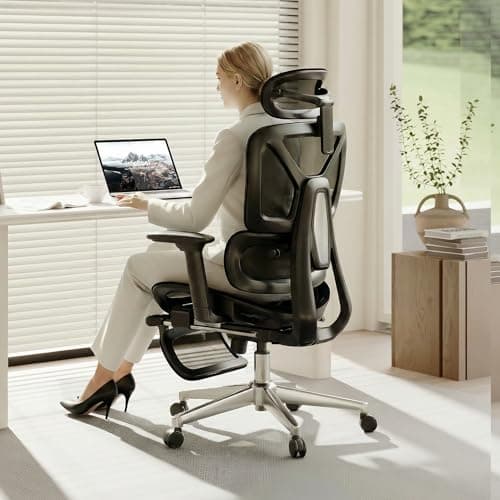
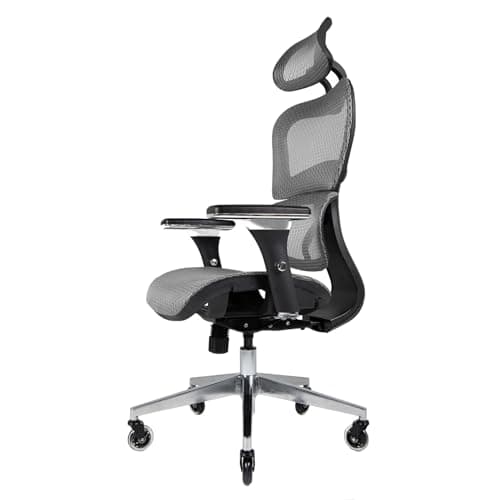
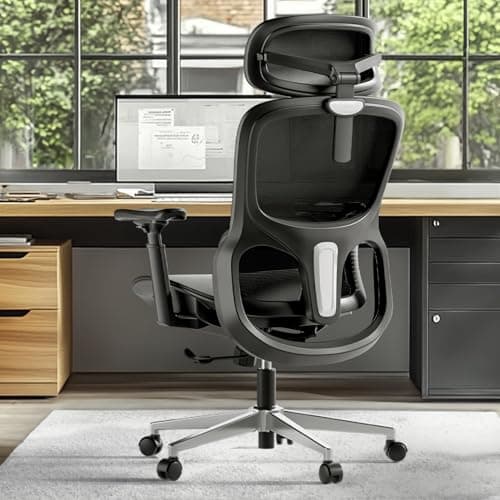
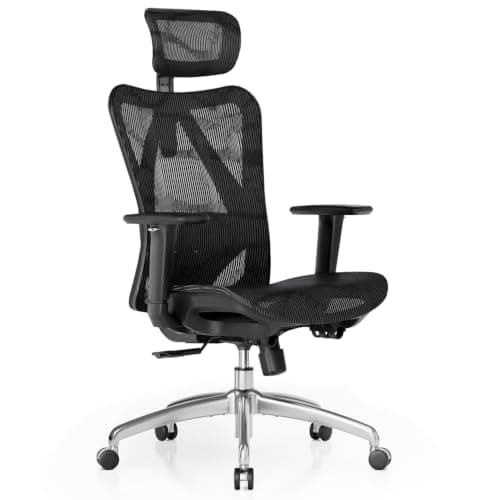
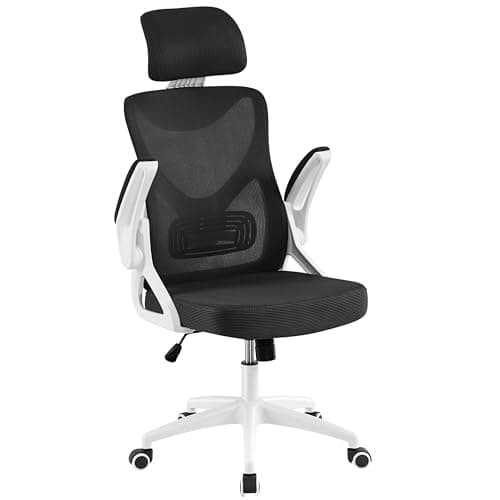
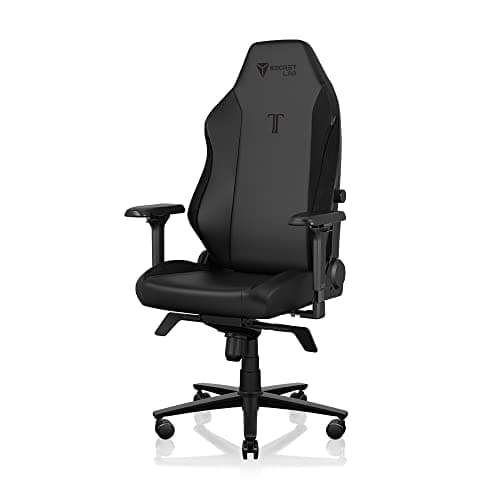
The best alternative to the Herman Miller Embody is the Secretlab Titan Evo: a foam seat rather than mesh, a 4-way adjustable lumbar, 4D metal armrests, a back that reclines to a published 165 degrees, and three frame sizes where the Embody has one. The budget pick is the Yaheetech Ergonomic Office Chair, which gets you a padded seat, a reclining back and a headrest for a fraction of one Embody armrest. And the pick for the complaint most people are actually trying to solve — a lower back that aches because it never moves — is the FlexiSpot ErgoX, whose lumbar support is specified as dynamic rather than fixed.
Here is the honest part first, because an alternatives page that will not say it is worth nothing. Nothing in this registry reproduces the Embody’s back. Herman Miller builds it as a pixelated surface on flexible ribs that reshapes continuously as you shift, and that is not a feature anyone else approximates with a lumbar knob. If that mechanism is specifically what you want, no chair below is the same thing cheaper. What the chairs below do is address the reasons people go looking: a back that does not move, a seat edge that cuts into the thighs, and a price that is hard to justify for a home office.
What the Embody publishes, and who matches it
| Embody characteristic | What it does | Closest alternative here |
|---|
| Pixelated back on flexible ribs | Reshapes continuously as you move | Nothing. The nearest idea is a dynamic lumbar (FlexiSpot ErgoX) |
| Layered foam seat | Forgiving at the front edge, warmer than mesh | Secretlab Titan Evo (cold-cure foam) |
| One size, wide adjustment range | Fits most people without choosing a frame | Titan Evo goes further - three sizes (S, R, XL) |
| Fully adjustable arms | Height, width, depth and angle | Nouhaus Ergo3D and Titan Evo (4D armrests) |
| Continuous posture change | No fixed “correct” position | Hbada P2 (135-degree stepless tilt) |
| Herman Miller long-term warranty | Decade-scale cover with a parts channel | None of the six publishes a term close to it |
Two rows of that table say “nothing”, and both are the rows that cost the most to build. The warranty one is the easier trade to reason about: our office chairs under $1,000 page collects the chairs that do publish a decade-scale term, and the Aeron is the one to read about there if the warranty is what you were buying.
Movement is the feature. Here are three cheaper ways to get it
- A lumbar support that moves on its own. FlexiSpot specifies the ErgoX’s lumbar as dynamic with a 5-level adjustable back, which is the nearest thing on this page to being followed rather than held.
- A recline you will actually use. If the chair cannot follow you, change posture yourself: the Titan Evo publishes 165 degrees, the Nouhaus Ergo3D 135 with a three-position lock, and the Hbada P2 a stepless 135-degree tilt. The reclining chairs roundup ranks that axis on its own.
- A footrest. The cheapest posture change there is, and the one the Embody cannot sell you. Under-desk footrests covers the field, including a retractable one built into the ErgoX above.
Where the Embody is still the right buy
Three cases, stated plainly. If you are managing an existing back complaint and have been advised to keep moving rather than hold a position, the rib back does something no lumbar knob does. If you genuinely cannot sit still — the sort of person whose chair is in four positions an hour — a chair that reshapes continuously is not a luxury. And if you want decade-scale cover with parts on the shelf, Herman Miller has the channel and none of these six publishes a term close to it. Everything else on that list is a preference the chairs below can serve.
One more honest note: the Embody runs warmer than the Aeron, because the seat is layered foam rather than suspension mesh. Four of the six alternatives here are mesh-backed. If heat is your complaint rather than movement, you are on the wrong page — the mesh chairs roundup and Aeron alternatives are the right ones.
The test to run in the first week
Whichever of these you buy, the Embody’s whole premise gives you a way to check it. Sit for forty minutes without consciously adjusting anything, then notice what moved. On a chair that follows you, your shoulders and hips will have shifted and the back will have shifted with them. On a chair that holds you, you will have ended up in one position and the ache will be in one place. If that is what happens, the fix is not more chair — it is a reason to stand up, which is what standing desk versus sitting is about and why a sit-stand frame is often the better thousand dollars.
Three things to set before you judge any of them
- Seat height so your forearms are level with the desk. Then, if your feet are not flat, the desk is too high and the chair is being blamed for it — the desk height guide has the measurement.
- Two fingers of clearance behind the knee. None of these six publishes a sliding seat pan, so if the seat is too deep the workaround is to raise it and add a footrest. The sizing guide explains which measurement decides.
- Lumbar support in the curve, not above it. Most people set it too high on the first try, which produces exactly the mid-back ache they bought the chair to fix. How to adjust an office chair is the ten-minute version.
If what you want is the brand, buy the other one
The Embody is the most expensive chair in either of our premium comparisons, and the Aeron is the Herman Miller chair most people are better served by: suspension mesh across eight zones, three frame sizes, and a published twelve-year three-shift warranty. Aeron versus Embody is the direct comparison with both chairs’ published specifications side by side, and it is the page to read before you spend two thousand dollars on either.