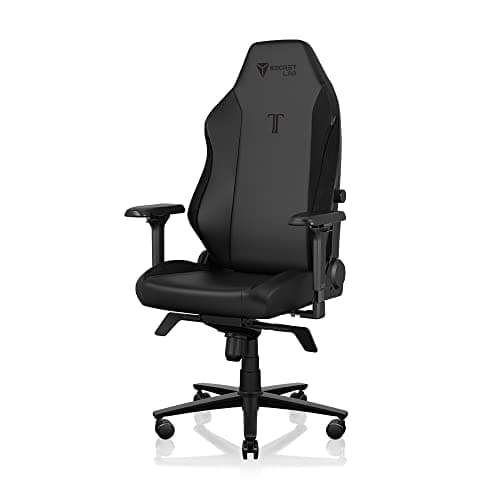
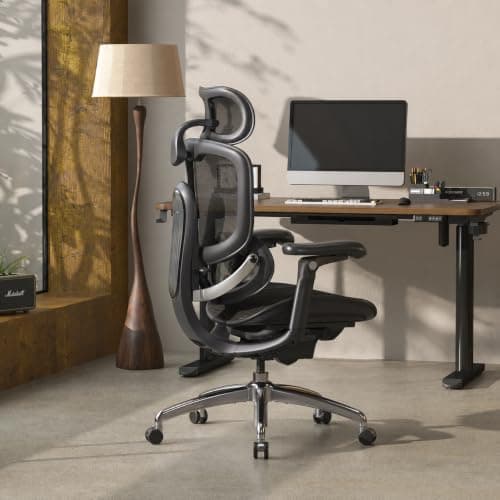
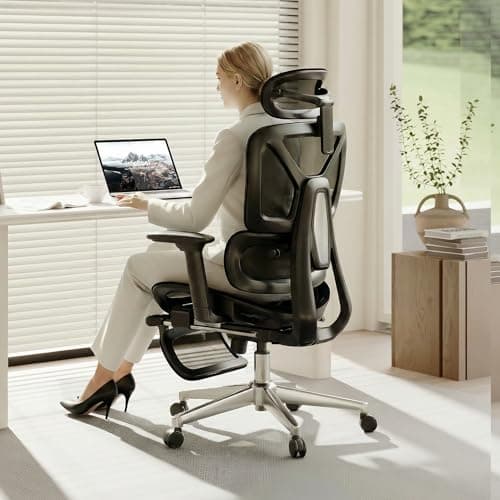
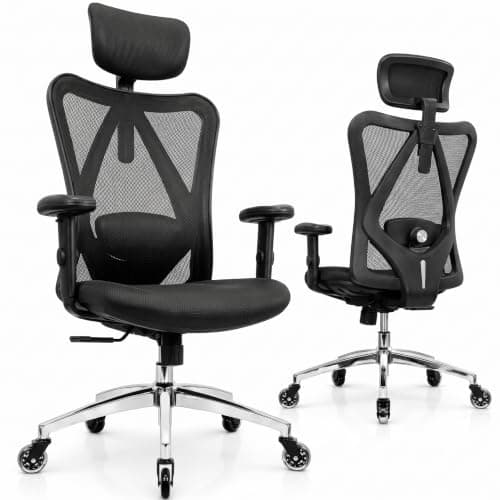
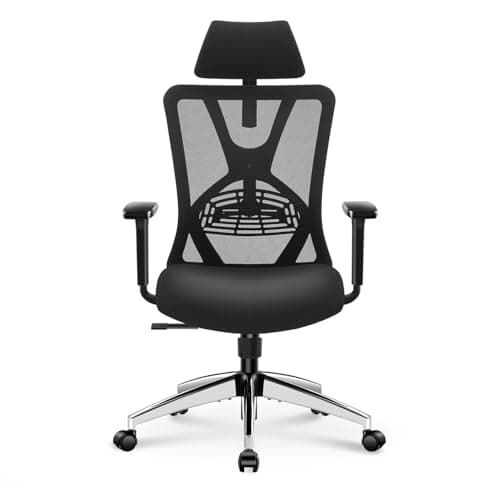
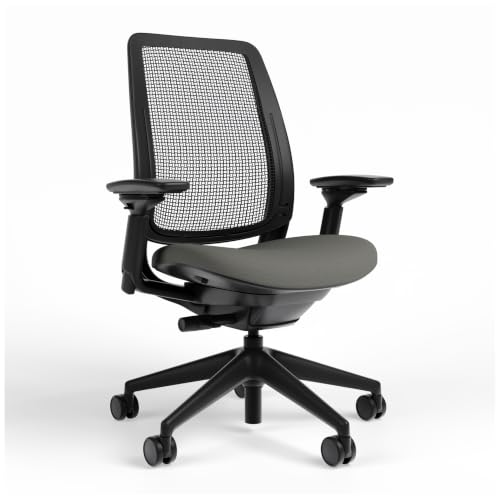
If what you want is a Steelcase that will still be under you in ten years, the Steelcase Series 2 is the pick and it is the same company’s LiveBack and 400 lb rating at less than half the Leap’s price. If the reason you looked at a Leap is the cushioned seat, the Secretlab Titan Evo solves fit with three sizes instead of a seat-depth lever. And the budget pick is the Ticova, which keeps the one adjustment most cheap chairs delete - a lumbar support that moves in and out as well as up and down.
What the Steelcase Leap is known for
Six published things, from Steelcase’s own specification for the Leap V2. Which of them you actually need is the entire decision:
- Adjustable seat depth. The lever that slides the seat pan forward and back so the front edge stops short of the backs of your knees. It is the single most valuable adjustment for long femurs, and it is almost absent from the field below.
- LiveBack. A backrest built to change shape as you move rather than brace a fixed curve against you.
- Lumbar height and firmness, separately. Most chairs let you move the support up and down. The Leap also lets you decide how hard it pushes.
- Natural Glide. The seat slides forward as the back reclines, so your eyes stay with the screen and your hands stay on the keyboard instead of drifting away from both.
- 400 lb rated, with a 500 lb Leap Plus, and fully adjustable 4D arms.
- A 12-year warranty covering the entire chair. Not the mechanism, not the frame - the chair.
And the honest reasons people look elsewhere, none of which make it a bad chair: it is at the top of the price range for a task chair; the standard configuration has no headrest; and because so much of the supply is resold, the configuration and condition of any given Leap vary in a way a new chair’s do not. One more gap worth naming, since it affects shopping: Steelcase does not publish a seat height range for the Leap, so if you are very short or very tall you cannot check that number before you buy.
The specification almost nothing else has
This goes before the picks because it is the most useful thing on the page. Of the six alternatives below, not one publishes an adjustable seat depth. That is not an accident of our shortlist; it is what the money buys at the top of this category. So if your thighs are long enough that the front edge of every chair you have owned has pressed into the back of your knees, the Leap is solving a problem the alternatives cannot, and you should read the rest of this page knowing that.
There are two honest workarounds, and they are different from each other. The first is sizing instead of adjusting: the Secretlab below comes in three sizes, so you choose the seat pan rather than slide it, which lands in roughly the right place if you are clearly at one end of the range. The second is fixing the geometry around the chair: raising the seat and adding a footrest changes the angle at the back of your knee without a depth lever at all. The measurement for both is the two-finger check in the office chair sizing guide, and how to adjust an office chair sets the five adjustments in the order that actually works.
What each alternative matches, in published numbers
| Chair | Capacity | Seat | Lumbar | Arms | Warranty |
|---|
| Steelcase Leap V2 (the original) | 400 lb (Plus: 500) | Upholstered, adjustable depth | Height and firmness | 4D | 12 years, whole chair |
| Steelcase Series 2 | 400 lb | Upholstered, fixed depth | Height-adjustable | 4-way | 12 years, mechanism |
| Secretlab Titan Evo | About 395 lb (XL) | Cold-cure foam, three sizes | 4-way integrated | 4D metal | 5 years |
| SIHOO Doro C300 Pro V2 | 330 lb | Mesh, fixed depth | Dynamic, self-adjusting | 8D | Not published as a term here |
| FlexiSpot ErgoX | 400 lb | Air mesh, fixed depth | Dynamic, 5-level back | 3D | Not published as a term here |
| Duramont | Not published | Thick cushion, fixed depth | Adjustable, one axis | Adjustable | Not published as a term here |
| Ticova | Not published | Foam, fixed depth | Height and depth | Adjustable | Short next to any premium chair |
Read the warranty column as carefully as the capacity one. Steelcase covers the Leap for twelve years and the Series 2 mechanism for the same term; everything below them is in the one-to-five-year world, and how long an office chair lasts works through what that difference actually costs you, which part fails first and which parts you can replace when it does. Where a maker publishes nothing we have written “not published” rather than guessing a number.
Which alternative matches which reason
| If you want… | The pick | What it matches or beats |
|---|
| The same brand and the same term | Steelcase Series 2 | LiveBack, 400 lb, 4-way arms, 12-year mechanism warranty |
| The cushioned seat, sized to you | Secretlab Titan Evo | Cold-cure foam, 4D metal arms, three sizes, 165-degree recline |
| More armrest adjustment, not less | SIHOO Doro C300 Pro V2 | 8D arms and a dynamic lumbar, at a fraction of the price |
| The 400 lb rating at a mid price | FlexiSpot ErgoX | 400 lb, dynamic lumbar, a 3D headrest the Leap does not include |
| A softer seat than any mesh chair | Duramont | A thick seat cushion under a mesh back, with rollerblade casters |
| The lowest price that still fits a back | Ticova | Lumbar that moves in two axes, plus a headrest |
What none of them match, beyond the seat depth, is lumbar firmness as a separate control and Natural Glide. Several chairs here move the lumbar up and down, and the SIHOO and the FlexiSpot both track your spine dynamically, but deciding how hard the support pushes is a Leap feature. And when you recline in any chair below, your eyes move away from the screen, which is the thing Natural Glide exists to prevent. Whether that matters depends on whether you work reclined or sit upright; if you do recline all day, the honest comparison is the best reclining office chairs, ranked on published angle and whether the tilt locks.
Three checks before you replace a Leap with any of these
- Run the two-finger check on your current chair. Sit back fully. If there is not a two-finger gap between the front edge of the seat and the back of your knees, seat depth is your binding problem, and the Leap or a sized chair like the Secretlab is the answer rather than a cheaper fixed-depth seat. The full sequence is in the office chair sizing guide.
- Weigh the warranty against the price gap. Twelve years of cover on a Leap, twelve on the Series 2 mechanism, five on the Secretlab, and shorter terms below that. Divide the price by the term before you decide which chair is expensive - how long an office chair lasts has what actually fails, and in what order.
- Check your own weight against the published rating, not the marketing. 400 lb on the Leap, the Series 2 and the FlexiSpot; about 395 lb on the Secretlab XL; 330 lb on the SIHOO; and no published figure at all for the Duramont or the Ticova. Office chair weight capacity explains what the number covers and what happens when a chair is run near it.
Mesh or upholstered, which is the real fork
The Leap is an upholstered chair: a foam seat and a flexing upholstered back. That is a different product from the suspension-mesh flagships, and if you came to the Leap because you dislike sitting on mesh, two of the picks here keep you out of it — the Secretlab (foam and leatherette throughout) and the Duramont (a thick foam seat under a mesh back). The other four are mesh-backed, which runs cooler and holds its shape longer but puts a firmer, more structured surface under you. If you are deciding between the two materials rather than between brands, the best mesh office chairs explains which mesh backs are genuine tensioned suspension and which are fabric stretched on a frame.
Where the Leap sits against the other flagships
If your shortlist still has more than one premium chair on it, the comparisons are already written and they turn on fit rather than features: Aeron vs Leap V2 is suspension mesh in three fixed frame sizes against an upholstered chair with an adjustable seat, Leap vs Gesture is the same chassis against Steelcase’s armrest specialist, and Herman Miller vs Steelcase takes the brand question head on. If the Leap is simply out of budget and you want the best chair that is not, the ranked field is the best ergonomic office chairs, and the best office chairs under $500 is the band where the adjustments stop being deleted.
Where the Leap is still the right buy
Three cases, stated plainly. If your femurs are long enough that seat depth is the adjustment deciding your comfort. If you work reclined and want the seat to glide forward with you so the screen stays where it was. And if a twelve-year whole-chair warranty is how you would rather buy a chair than replacing a cheaper one twice. Those three are what the price buys, and nothing on this page reproduces them. Everything else — the 400 lb rating, 4D arms, a flexing back, a cooler seat, a headrest the Leap does not even include — is available for less, which is the whole argument above.